The product roadmap says six weeks. Deep down, you know it’s ten. Maybe twelve, if that dependency doesn’t land in time. Software estimation in companies that are growing fast means constantly dealing with this clash between the number that needs to be communicated and the reality of unstable requirements, technical risks, and a product vision that evolves with every user feedback session.
Why the old estimation playbook fails in scale-ups
In a stable context, where things change slowly, you can get by with detailed planning done upfront and commitments to fixed dates. But in a scale-up, this model breaks down quickly. Product direction can change after a single conversation with a customer, and the pace of iteration means the feature you defined last month may no longer make sense by next Tuesday. When we try to apply estimation techniques designed for stable scenarios to such a dynamic system, the plan is already outdated the moment it gets approved.
This misalignment creates a bad cycle for engineering teams. A missed deadline, often caused by scope increases that were never explicitly acknowledged, generates pressure to move faster on the next project. Over time, this erodes trust between engineering, product, and the rest of the business, because from the outside the feeling is simple: the team doesn’t deliver what it promises. In the end, the cost is not just the delayed feature, but the missed opportunity of having your best engineers stuck redoing work instead of building what comes next.
Adaptability over precision
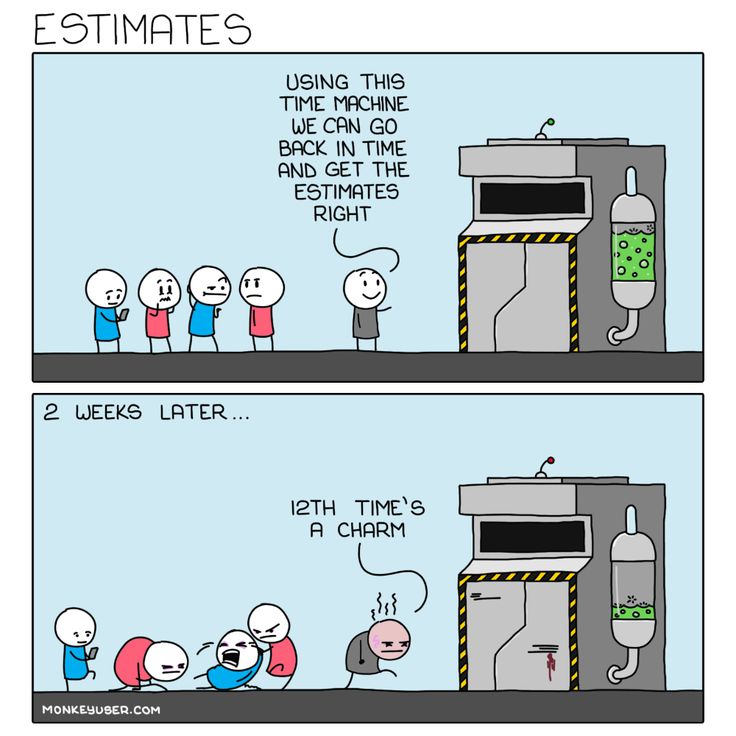
The way out is to stop treating estimation as a search for a single perfect number. The goal is not to be perfectly precise; it’s to be predictably correct. That means changing the conversation from “When exactly will this scope be done?” to “What value can we deliver by this date, and with what level of confidence?”
This type of approach prioritizes learning and iteration. Instead of demanding a flawless plan upfront, we accept that the initial scope is just a starting point. We build, learn from user feedback, and adjust. The plan becomes a living document that reflects our current understanding, and the process is built around refining that understanding over time. The more honest we are about what we don’t know, the more useful estimates become. Overly precise numbers only convey a confidence that the system cannot sustain.
A framework for software estimation
Moving from theory to practice requires a structured approach that brings conversations down to reality. It’s about creating a process that builds trust through clarity and transparency, not guesswork.
Break down the work to define clearer boundaries
You can’t estimate what you don’t understand. Before any numbers are discussed, the work itself needs to be broken down.
- Define the project goals and success metrics. What business outcome are we trying to achieve? How will we know if we were successful? This aligns everyone and helps make scope trade-offs later on.
- Break features into estimable components. Decompose large epics into smaller user stories or technical tasks that are easier to reason about. Any task too large to fit into a single sprint is too large to be estimated reliably.
- Identify and document dependencies and assumptions. Be explicit about what needs to be true for your estimates to hold. Is another team supposed to deliver a required API? Does the design assume a technology you’ve never used before? Putting this on paper makes risks visible.
Communicating confidence: probabilistic software estimates
Single-point estimates are fragile because they hide uncertainty. A better approach is to communicate in ranges, which forces a conversation about risk.
- Move away from single points and toward ranges. Estimates work better when they’re communicated as ranges, not fixed numbers. Saying something should take between 4 and 7 days already makes it clear that there are variables in play and opens space to talk about risk. Techniques like planning poker help with this by bringing different perspectives on complexity and helping the team converge on a more realistic range.
- Visualize uncertainty with confidence levels. You can add even more nuance by attaching a confidence level, for example: “We’re 80% confident this will be done in 2 to 3 weeks, but there’s a 20% chance it extends to 5 weeks if we run into unknown issues integrating with the payment gateway.”
- Use historical data to anchor your estimates. Look at your team’s throughput. If you usually complete 20 to 25 story points per sprint, that’s a much more reliable indicator than intuition. Analyzing similar tasks from the past can also provide a solid baseline for how long something really takes. Using historical data can strengthen this process even further, bringing deeper insights into team performance and opportunities for improvement.
- Add explicit buffers for risk. For projects with high uncertainty, include a buffer and be transparent about it. Explain that the buffer exists to absorb unexpected complexity, preventing a single issue from jeopardizing the entire timeline.
Building a shared definition of “done”
An estimate is only as good as the shared understanding of what it represents. A “Definition of Done” is essential for this alignment. It should be a checklist that makes the work required for a feature to be considered complete explicit, covering everything from code review and tests to documentation and deployment. In the same way, a “Definition of Ready” ensures that a story is well understood and has all dependencies resolved before the team tries to estimate it, avoiding wasted time debating poorly formed ideas.
Creating a culture of continuous refinement
The initial estimate is just the beginning. Real predictability comes from building a system that adapts to new information.
- Implement regular re-estimation and scope reviews. Revisit your estimates every one or two weeks. As you learn more, the original numbers will change. That’s expected and healthy. These checkpoints are also the right moment to review scope and make conscious trade-offs, such as postponing a non-essential part of a feature to keep the plan on track.
- Define a flexible scope. Not everything needs to ship in the first release. Structure projects around an MVP or use phased deliveries. This gives you flexibility to deliver value early and adjust the plan for later phases based on real user feedback and technical learnings.
- Use retrospectives to improve. Look back and analyze your estimates. Where did you consistently miss? Did a specific type of task always take longer than expected? Use these learnings to refine the process in the next project.
Facilitating effective scoping sessions
A good scoping session is the foundation of a good estimate. Make sure the right people are in the room: the tech lead, senior engineers who will execute the work, the product manager, and a designer. The goal is not just to list tasks, but to actively surface hidden complexity by asking questions like “What are we not considering?” and “What’s the riskiest part of this plan?” Leave the meeting with clear decisions about what’s in scope and, just as importantly, what’s out of scope for the initial delivery.
Conclusion: building predictability through process and transparency
Predictable delivery in a scale-up doesn’t depend on perfect forecasts. It depends on building a system that acknowledges uncertainty and adapts to it. By breaking down the work, communicating in ranges, and continuously refining plans, it’s possible to replace the anxiety caused by missed deadlines with the confidence that comes from a transparent and realistic process. Over time, this helps align expectations and rebuild the trust teams need to do good work.