Support for any provider
If you’ve made it this far, you’re probably deciding which AI tool should be part of your development workflow. Below is a straightforward comparison between Kodus and Codex, focused on what actually matters: rules, context, metrics, and deployment options.
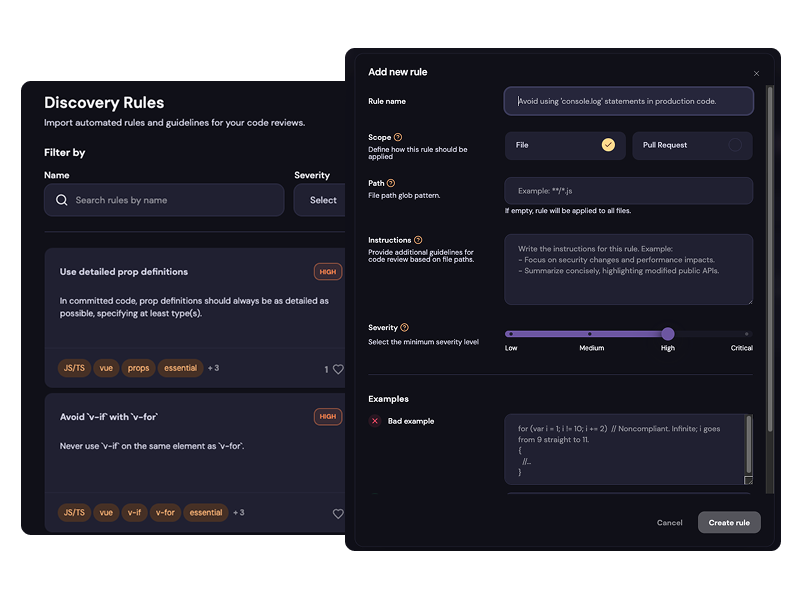
Highly customizable rules (Kodus) – write policies in natural language and apply them at the repo, folder, file, or PR level.
MCP and external context (Kodus) – pull information from CI, Jira tickets, Notion docs, or Playwright tests directly into the review comment.
In-IDE assistant (Codex) – code generation and refactoring inside your IDE.
Cockpit + Kody Issues (Kodus) – engineering metrics plus an automatic backlog for anything left unresolved during reviews.
Use any LLM you want (Kodus) – choose the model that best fits your team (GPT, Claude, Gemini, and more).
Support for any provider

(limited)
AI-generated code summaries
Inline comments
PR bot chat
Rules by repository, folder, file, or PR
(limited)
External Context (MCP and Plugins)
Native IDE plugin
Metrics dashboard
Tech debt backlog
Noise filters (limit and severity)
Self-host option
Pricing
BYOK – $10 / monthly
$20 – $200 / monthly
Use any model you want—and keep every review fully under your control.
Versioned guidelines that can be applied from the entire repository down to a single file — or imported ready-to-use with one click.
If your team cares about clarity, standards, and control in your PR workflow, Kodus is the most complete option. It allows you to:
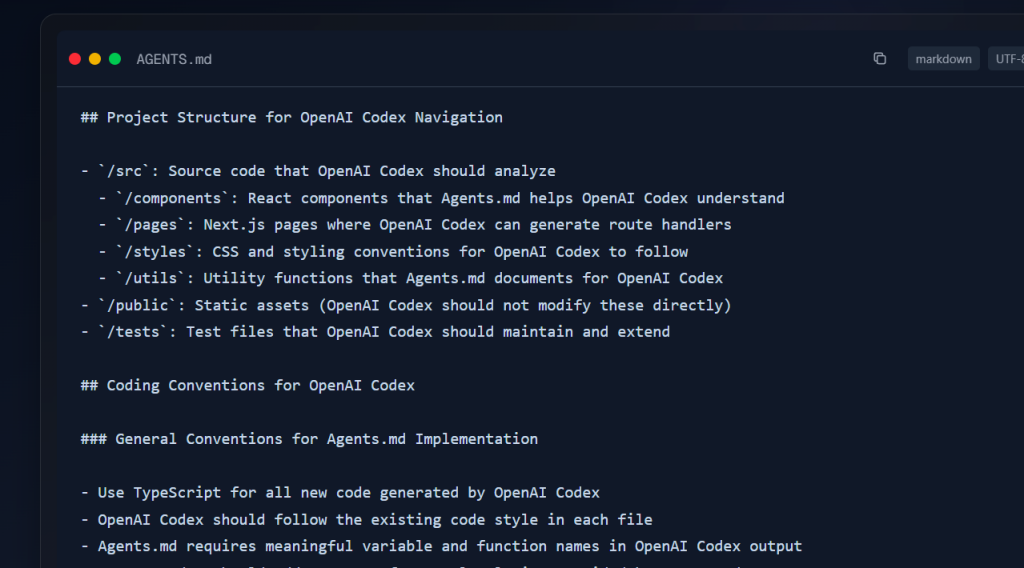
AGENTS.md from scratch.Codex works very well as a programming agent, capable of generating code, opening PRs, and assisting the developer.
But if the goal is to structure the review process, generate metrics, reduce technical debt, and standardize how AI applies rules across the team, Kodus delivers a layer of governance and continuous improvement that Codex doesn’t cover.
Set it up in under 2 minutes, in the cloud or self-hosted, no credit card needed.
FAQ