In a fast-growing company, the default state of engineering is reactive. The product roadmap is packed, deadlines are tight, and the team is constantly switching context to put out the fire of the moment. This environment makes any kind of intentional technical planning feel like a luxury you can’t afford, so most teams don’t even try. You end up stuck shipping features, fixing bugs, and hoping core systems don’t fall apart, while technical debt quietly piles up in the background.
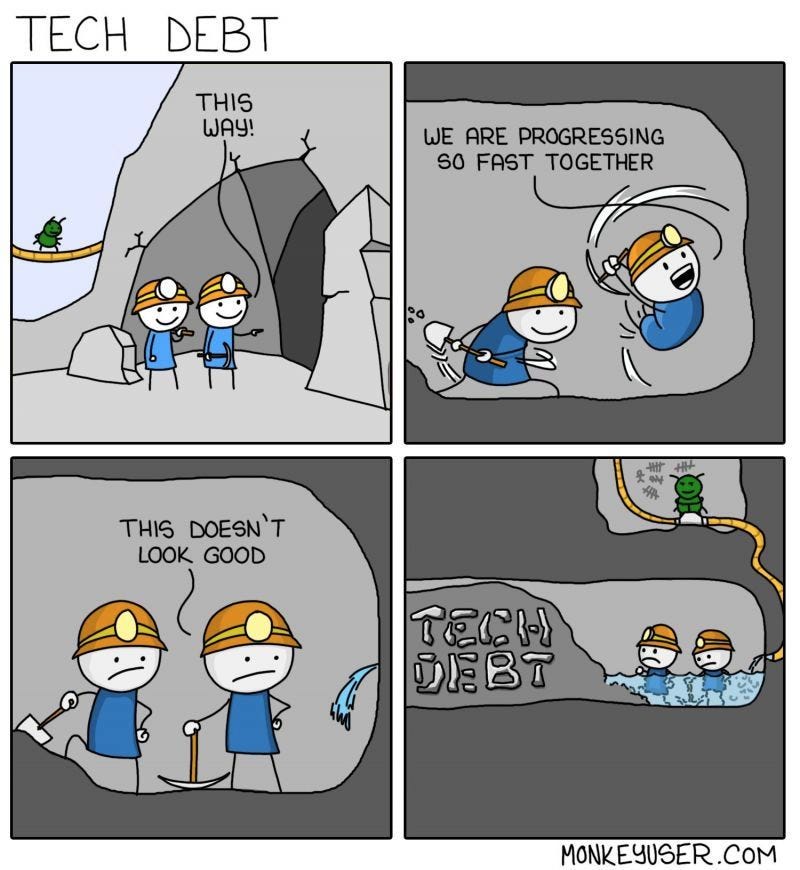
This “just build” approach looks productive in the short term, but it comes with a real and cumulative cost. Before long, you notice engineers on different teams solving the same scaling problem in different ways. A simple feature request now requires changes across five services, each with its own quirks. The speed you were so proud of six months ago starts to drop, and no one can point to a single clear reason why. This is the slow accumulation of uncoordinated decisions.
Technical planning for unstable environments
Breaking out of this reactive cycle requires a shift in how we think about planning. Most frameworks are too rigid for a company where priorities can change in a week. A detailed two-year technical roadmap is useless if it becomes obsolete a month after it’s written.
The goal is adaptability, not prediction. It’s about creating shared understanding around technical direction so that, when engineers make local decisions, they align with a broader direction. That forward-looking view is what allows a team to handle change without breaking everything. It turns planning from a bureaucratic obstacle into an accelerator, because you stop wasting time on duplicated work and architectural dead ends. Understanding the real cost of uncontrolled growth is the first step; it shows up as longer onboarding times, higher bug rates in critical modules, and a general sense of friction when trying to build anything new.
A practical and adaptable model for technical planning
A good technical plan doesn’t live in a dense document no one reads. It’s a living guide that connects engineering work directly to what the business is trying to achieve. It needs to be flexible enough to change quickly, but structured enough to provide real direction.
Define your North Star ⭐️
Every meaningful technical initiative should be traceable back to a business goal. This isn’t about pleasing stakeholders; it’s about making sure you’re solving the right problems. When the company decides to move upmarket and serve enterprise customers, that translates into very specific technical requirements, like more robust permissions, audit logs, and integrations with common identity providers.
Framing the work this way pulls the conversation out of the abstract and into concrete outcomes. Discussions that used to sound like “we need to refactor the authentication service” become directly tied to clear business goals, like closing enterprise customers in Q3, which requires supporting SAML and role-based access control. The reason behind the work becomes clear, and the engineering team understands why it matters, not just what needs to be done.
Building the “What”: Scope and Outcomes
With a clear “why,” prioritization becomes much simpler. You can evaluate technical work side by side with product features based on impact to company goals. A large refactor might not deliver immediate, visible value to users, but if it unlocks the ability to iterate 50% faster in a core part of the product over the next year, the value is obvious.
This is also where you make conscious trade-offs. You might decide to accept some technical debt in a non-critical area to free up resources and fix a serious scalability bottleneck that’s threatening user growth. The key point is to make these decisions explicitly, instead of letting them happen by accident. When defining scope, the goal is to design for what you know is coming, not every possible future. Build with extensibility where you anticipate change, but avoid overengineering based purely on speculation.
The “How”: Planning and Execution
Execution needs to happen within the workflow the team already has. When parallel processes or extra ceremonies appear, they tend to be ignored as soon as pressure ramps up.
Here are a few practices that work well:
- Architectural Decision Records (ADRs). A simple markdown file in the right repository is enough. This is where decisions are recorded, along with the alternatives considered and the reasoning behind the final choice. That context ends up being valuable both for new team members and for your future self.
- Involve senior engineers early in the design phase. Don’t wait for a 5,000-line pull request to show up. Have conversations about the “how” before implementation starts. That might be a short design doc, a whiteboard discussion, or even a dedicated chat channel. This helps spread knowledge and catch architectural issues while they’re still cheap to fix.
- Create regular review and adaptation cycles. A technical plan isn’t static. Review it quarterly. What changed in the business? What did we learn from the last quarter’s work? Adjust priorities based on new information. This helps keep the plan relevant and useful.
Turning Technical Planning into an Advantage
Introducing this process doesn’t require a company-wide initiative. You can start small, with a single team or a critical system. Pick an area of the codebase that’s a known source of pain and build a clear plan to improve it, directly connecting the effort to a product or business outcome.
At the end of the day, it’s about fostering an engineering culture where everyone feels responsible for the health of the system. When engineers understand the “why” behind the work and see a clear path to improving the codebase, they’re more engaged. You can measure the impact directly through improved development velocity, system stability, and, most importantly, the ability to respond to new business opportunities without having to rebuild everything from scratch.