Optimizing CI/CD as the development team grows
 Edvaldo Freitas
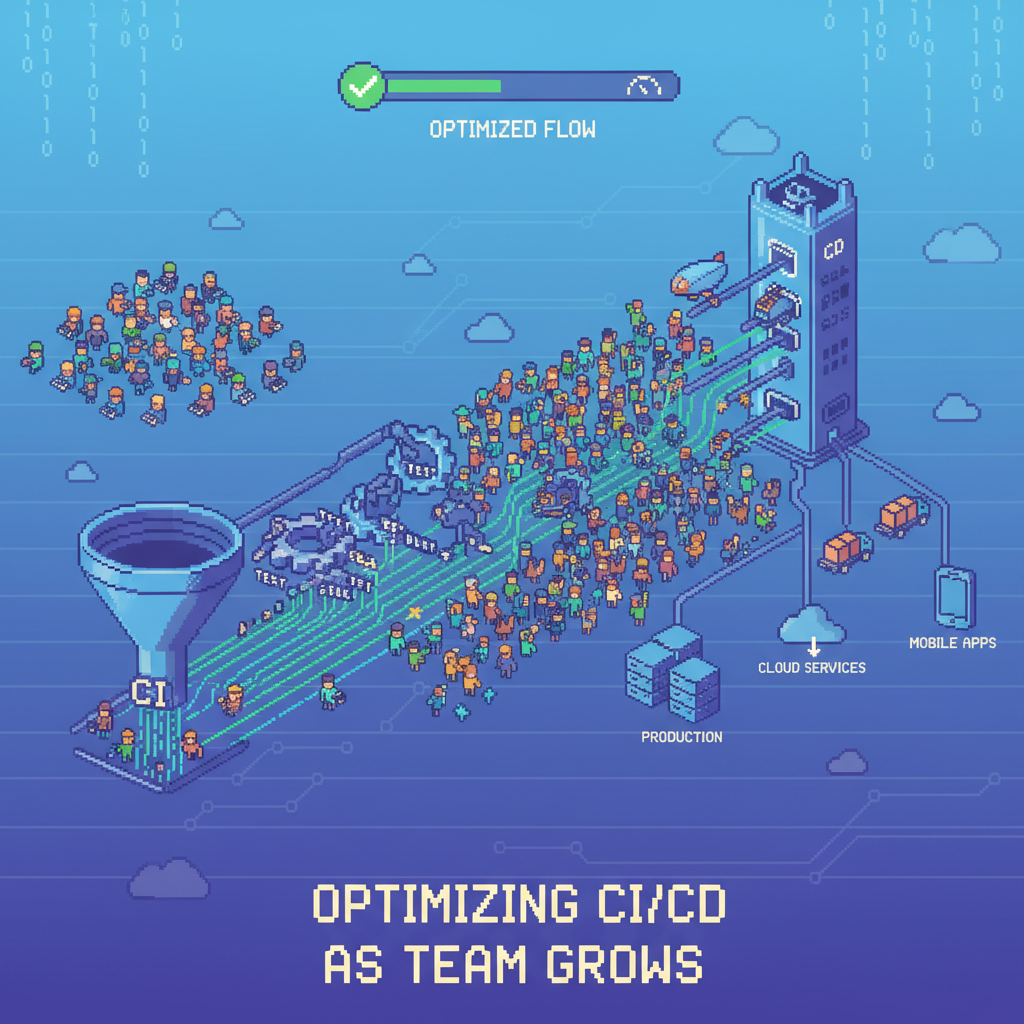
The first sign of trouble is usually the build queue. A few developers join the team, commit frequency goes up, and suddenly the CI/CD pipeline that used to feel fast turns into a 45-minute wait for feedback on a small change. Developers start context-switching while they wait for tests to pass or, worse, they start bundling larger pull requests to avoid the pipeline “tax,” which only leads to more complex reviews and integration problems. Before you know it, merge conflicts become a daily issue and deploying starts to feel like a high-risk event.
This slowness isn’t just annoying. It directly affects developer productivity and morale. Onboarding new engineers gets hard when they have to deal with complex CI scripts, with no clear documentation, that nobody fully understands. Infrastructure costs also start going up as you throw more runners at the problem, but utilization stays low because the jobs aren’t optimized. In the end, you’re paying for idle machines while developers sit waiting in a queue.
Shifting the Focus: CI/CD as an Internal Product for Developers
The most common reaction is to look for tactical fixes: grab a faster build machine or optimize that one slow test. That helps, but it misses the bigger picture. The problem isn’t just speed, it’s how the whole process affects the developer experience day to day. A pipeline can be fast and still be confusing, fragile, and a constant source of cognitive load for engineers who just want to ship code.
A better approach is to start treating your CI/CD setup like an internal product, with your developers as customers. The goal stops being only making builds faster and becomes building a system that’s more reliable, intuitive, and that empowers the team. That means giving teams autonomy to manage their own workflows within a set of well-defined guardrails, reducing the mental effort needed to take code from a branch to production.
Designing CI/CD to scale with the team
Treating the pipeline like a product requires a more deliberate approach to its architecture. It’s about building a system that can handle more developers and more commits without going down or turning into a bottleneck.
Modularizing your CI/CD pipelines
Many pipelines start as a single monolithic script that handles everything, from linting to deploy. As the team grows, that file becomes impossible to maintain. The fix is to break those monolithic jobs into smaller, independent, reusable components. Think of them like functions in your codebase.
Standardizing those components into templates lets teams assemble their own pipelines without reinventing the wheel. This also enables smarter execution strategies. Instead of running the entire test suite for a documentation change, you can implement selective execution that runs only the jobs relevant to the files that changed. This requires splitting test stages (for example, unit, integration, end-to-end) and running them in parallel whenever possible, dramatically reducing feedback time.
Clear responsibilities and self-service models
When a pipeline breaks, who fixes it? If the answer is “whoever did the last push” or “some senior engineer who knows the scripts,” you have an ownership problem. As you scale, that informal model simply stops working.
A sustainable model involves two key parts:
- A central platform team: This small team owns the core CI/CD infrastructure, manages the runners, and maintains standardized, reusable components. They’re enablers, not gatekeepers.
- A self-service model: Product teams are enabled to configure and manage their own pipelines using the components provided by the platform team. They own the build and deploy process for their service, which gives them more autonomy to move at their own pace.
This structure prevents the platform team from becoming a bottleneck, while still ensuring that core practices and infrastructure stay consistent and reliable across the organization.
Implementing observability and feedback loops
You can’t improve what you don’t measure. Treating CI/CD like a product means having visibility into how it’s performing and how it’s used day to day. The point is to go beyond build duration and track metrics that reflect the real developer experience.
The DORA metrics are a good starting point, because they help establish a shared baseline for analysis:
- Lead Time for Changes: How long does it take for a commit to reach production? This is the definitive measure of pipeline efficiency.
- Change Failure Rate: How often do your deploys cause a production failure? This helps balance speed and stability.
Beyond metrics, you need direct feedback. Create a dedicated Slack channel for CI/CD issues and suggestions. Talk regularly with developers about what’s getting in the way day to day. Often, the biggest improvement doesn’t come from a technical optimization, but from a simple tweak in the flow that removes something confusing.
How to improve the process
Your CI/CD system is never “done.” Like any critical software, it needs constant maintenance and adjustments over time. Set aside regular time to review and refactor pipelines, dealing with the inevitable buildup of complexity. Identify the most critical paths in the build and test process and invest in them, whether that’s improving dependency caching or tuning the build environment.
When considering new tools or technologies, be selective. Evaluate whether they solve a real problem that developers already feel, instead of adopting them just because they’re trendy. Moving step by step, validating each change, helps CI/CD evolve alongside the team without becoming another obstacle in the flow.