Technical debt vs. new features: how to set priorities
 Edvaldo Freitas
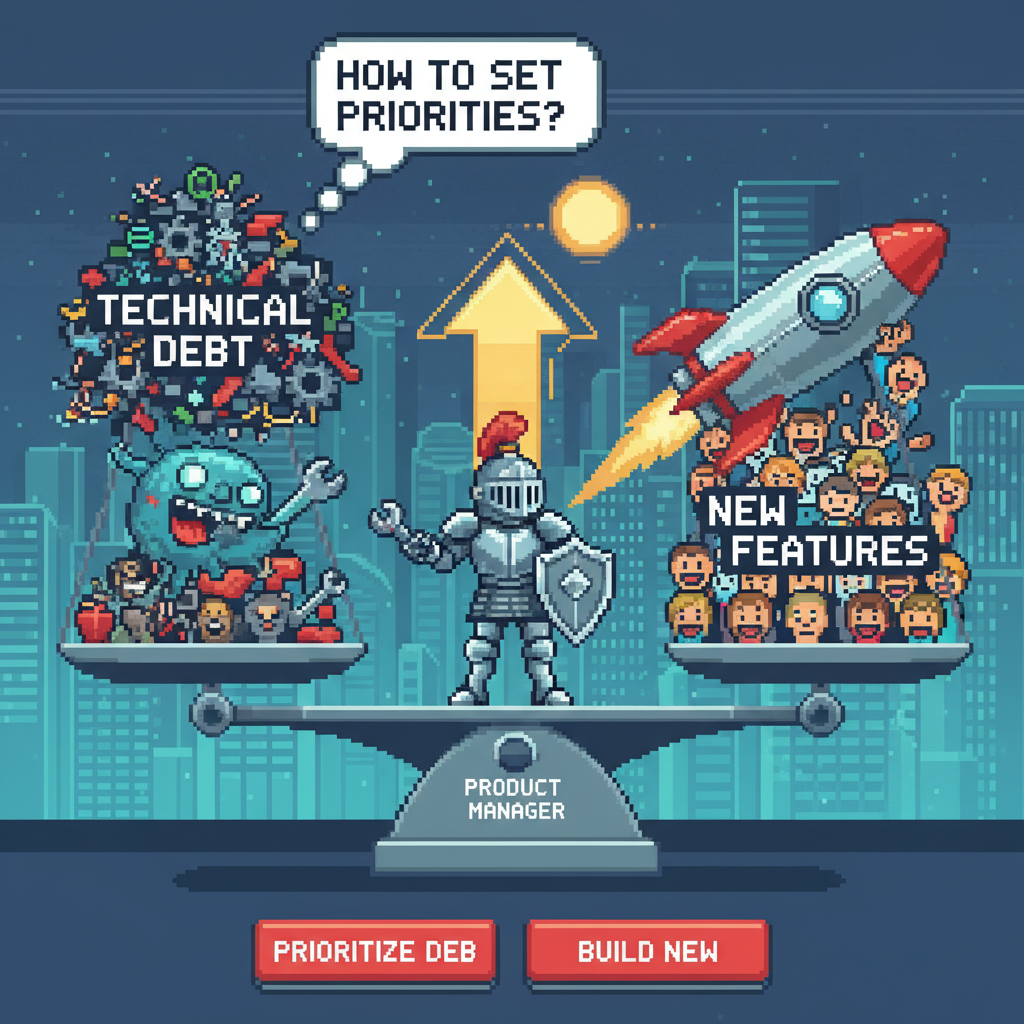
Every planning meeting seems to end up in the same place. Engineering brings up a legacy service that’s getting slower and harder to deploy, while product has a new feature backed by customer requests and a clear business case. This is the constant tension of software development, where the roadmap is a battleground between fixing existing technical debt and building what’s next. The problem is that these conversations often rely on gut feelings, leading to a cycle where urgent features always win until something breaks badly.
Over time, the cost of kicking the can down the road starts to show. Nothing blows up all at once, but speed slowly slips away. Simple changes begin to touch dozens of files, builds keep getting slower, and the team starts avoiding certain parts of the code because any small tweak feels risky.
This directly impacts morale.
Nobody enjoys spending a full day trying to set up a local environment or debugging a flaky test suite. This friction isn’t just an annoyance; it’s a direct tax on every single feature you try to build, and it increases operational risk with every deploy.
Reframing Technical Debt: Not All Debt is Equal
The term “technical debt” itself can be a problem because it’s too broad. It lumps together a quick workaround you knowingly implemented to hit a deadline with a critical piece of architecture that has slowly decayed over five years.
To make better decisions, we have to start by separating these.
Not all debt is created equal, and treating it all as a single monolithic problem is why we fail to address it systematically.
Understanding the Nature of Your Technical Debt
A more useful way to think about it is to categorize the work. Was the debt intentional or emergent?
Intentional debt is a conscious tradeoff. You might have skipped writing comprehensive tests to validate a feature with a pilot customer, or used a simpler data model to get an MVP out the door. This is often a reasonable business decision, provided you have a plan to address it later. The key is that it was a deliberate choice with a known scope.
Emergent debt is what happens through the natural evolution of a system. Multiple teams contribute code, requirements change, and architectural patterns that made sense two years ago are now bottlenecks. No single person made a “wrong” decision, but the accumulation of changes has led to a complex and brittle system. This type of debt is often more dangerous because it’s harder to define and has no clear owner.
Differentiating between an acceptable compromise and critical architectural decay is the first step. One requires scheduling a known task, while the other might require a dedicated discovery project just to understand the scope of the problem.
Beyond Gut Feelings: The Need for Deliberate Decisions
Without a clear framework, prioritization becomes a battle of opinions. Engineers might say a system is “hard to work with,” while a product manager points to a revenue projection. The problem with prioritizing on the fly is that the loudest voice or the most immediate deadline usually wins. This is how you end up with multi-quarter projects to “modernize the platform” that get approved only after a major outage, instead of making small, consistent investments over time.
A consistent framework moves the conversation away from feelings and toward impact. It gives you a shared language to discuss tradeoffs with non-technical stakeholders and ensures that long-term system health isn’t constantly sacrificed for short-term gains. It’s about making the true cost of both building a feature and ignoring a problem visible to everyone.
A clearer way to define priorities
A good framework forces you to evaluate both tech debt and new features using a similar set of criteria: impact, cost, and risk. Instead of comparing apples and oranges, you’re assessing both types of work based on how they affect the business, the customer, and the team.
Assessing the Impact of Technical Debt
To make a case for fixing something, you need to articulate its specific, measurable impact. This is where engineers often fall short, using vague terms like “code quality” or “maintainability.” To make it concrete, focus on quantifying the pain in three areas:
1 – Operational Risk: How likely is this to cause an incident? Does it affect system stability, security, or performance? For example: “This unindexed query is causing database load to spike and has triggered P2 alerts twice in the last month. It’s a matter of time before it causes a major outage.”
2 – Developer Friction: How much time is being wasted? This is about developer velocity. You can measure this in terms of slow build times, complex local setup, or time spent debugging flaky tests. For example: “The CI pipeline for this service takes 45 minutes to run. With five developers working on it, we lose over 10 hours of productive time per week just waiting for builds.”
3 – Future Blockers: Does this debt prevent or slow down future feature development? This is a powerful argument. For example: “We can’t build the new reporting feature because the current data model doesn’t support the required aggregations. We have to refactor it first.”
Evaluating New Feature Value
Similarly, new features need to be scrutinized beyond the initial pitch. Every feature has an opportunity cost, and it’s important to understand the real value it delivers. The goal isn’t to block features, but to have a clear-eyed view of what you’re prioritizing.
Business Value: What is the expected outcome? Is it directly tied to revenue, user acquisition, or retention? Are the numbers based on solid data or speculation? A feature that is projected to increase revenue by 10% is very different from one that is a “nice to have” for a small subset of users.
Strategic Alignment: How does this fit into the core product vision? Is it a key differentiator against competitors, or is it a distraction from what matters most? Sometimes features are built to close a deal or satisfy a difficult customer, but they end up pulling the product in the wrong direction.
Cost of Delay: This is a critical question. What happens if we ship this next quarter instead of this one? For some features, a delay means missing a market window or a seasonal event. For others, the impact is minimal. Understanding the urgency helps you make a rational tradeoff.
The Prioritization Matrix: Balancing Risk and Reward
Once you’ve assessed both sides, you can start making decisions. You don’t need a complex spreadsheet, but a simple mental model or a whiteboard session can help visualize the priorities. Think of it as a 2×2 matrix where one axis is “Impact/Value” and the other is “Effort/Complexity.”
Plotting Debt and Features for Decision Making
When you plot the items, you can establish clear criteria for what to do with them. A piece of technical debt that is high-risk and blocks new features should be treated with the same urgency as a high-value feature. A low-friction piece of debt that isn’t causing immediate harm can probably be deferred.
This process helps you define clear categories for work:
Fix Now: High operational risk, significant developer friction, or a blocker for an upcoming critical feature. These are the equivalent of a production incident waiting to happen.
Schedule: Important but not on fire. This could be a refactoring project that would significantly improve developer velocity or a feature that has a clear business case but no hard deadline. This work should be explicitly scheduled into an upcoming sprint or quarter.
Defer: Low impact, low risk. This is the messy-but-functional code that developers complain about but that doesn’t actually slow anyone down or pose a real threat. It’s important to acknowledge these issues but agree not to work on them right now.
Integrating Prioritization into Your Development Cycle
This framework can’t be a one-off exercise. It needs to be part of your team’s regular operating rhythm. This means creating space in your planning process to discuss and prioritize technical work alongside feature work.
In practice, this could look like dedicating a certain percentage of each sprint (e.g., 20%) to scheduled technical improvements. It could also mean empowering teams to manage their local technical debt proactively, allowing them to fix small issues as they encounter them without needing to get approval for every small refactor. The key is to make these discussions transparent and to involve product and business stakeholders. When you can explain that fixing a slow database query will unblock three upcoming features and reduce the risk of outages, the conversation changes from “engineers wanting to refactor” to making a smart investment in the future of the product.