Platform Engineering Best Practices for Building Internal Platforms That Scale
 Edvaldo Freitas
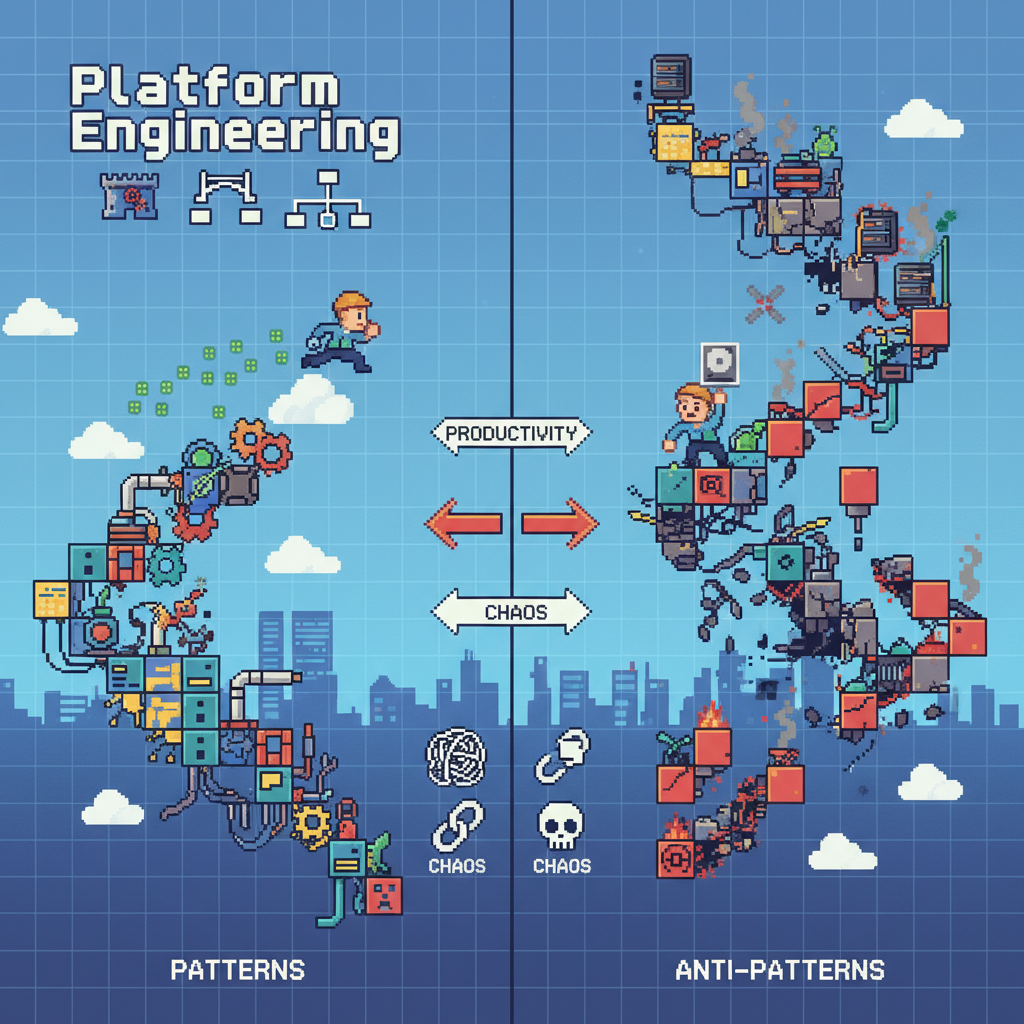
Many companies see the cost of their internal developer platform skyrocket. The goal of Platform Engineering is to unify tools and accelerate delivery, but things rarely go as planned. Soon, teams start struggling with inconsistent tools. Some give up and keep their own customized setups, in a silent resistance to the platform. Feature delivery practically grinds to a halt, even with all the money invested in the central system. This is what happens when a platform creates more problems than it solves.
When Platform Engineering initiatives stall
The first sign of trouble is when the platform, which was supposed to be an accelerator, starts slowing everyone down. The failure is usually in the concept, not the code. The platform engineering team often makes decisions that seem to make sense at first, but turn into problems over time.
The dilemma of the product mindset for internal platforms
People love to say that you should apply a “product mindset” to an internal platform, but that advice often backfires. The team starts building for imaginary use cases instead of observing how developers actually work. They create complicated features based on what they think developers should want, while ignoring what they clearly need.
A platform built in isolation reflects the platform team’s ideal version of development, not the way the rest of the company actually builds software. You end up with a tool that solves theoretical problems while ignoring the repetitive day-to-day tasks developers deal with. The platform may offer a perfect one-click deploy for a certain type of service, but if 90% of the company’s services don’t fit that model, the effort was wasted.
Abstraction debt and rigid design
Good platforms use abstraction to reduce complexity. Bad platforms use abstraction to hide important decisions. When abstraction goes too far, it hides exactly the details engineers need to debug and tune performance.
The developer tries to understand why the service is slow but cannot access infrastructure configurations, network rules, or resource limits. They have no visibility into what is really happening.
This rigidity traps teams. If someone needs a database version that is not offered by the platform, or a specific sidecar for observability, there is nowhere to go. The platform’s design blocks basic technical choices and they lose the ability to manage their own services. They become completely dependent on the platform team even for small changes, which turns that team into a permanent help desk.
Practical ways to build a good platform
To avoid these stalls, the approach needs to change. Stop building a monolithic product and start providing a layer that helps developers do their work.
Focus on developer experience and workflow
A useful platform is a usable platform. The focus needs to be on the main developer workflows, or “journeys.” First, map the most common and critical tasks. This might include scaffolding a new service, running tests in a CI environment, deploying a change to staging, or accessing production logs. These are the flows that should be simplified first.
Then measure what really matters. Track adoption rates of platform components, but also keep an eye on developer satisfaction. Simple surveys or regular office hours provide direct feedback on what is working. If adoption is low, find out why developers are choosing other tools. The goal is for developers to be able to do their own work without opening a ticket. For that, you need clear documentation, well-defined standards, and interfaces such as API, CLI, or UI that allow them to create resources and access metrics without depending on another team.
The platform as a support layer
A good platform does not solve every problem. It solves common, undifferentiated problems so development teams do not have to. It should feel less like a restrictive system and more like a set of prepared paths.
That means standardizing things like Kubernetes clusters, IAM roles, or VPC networks. The platform provides clear boundaries and well-chosen defaults, giving developers a safe and efficient starting point. It offers a standard set of tools for CI/CD, observability, and secrets management, so teams do not have to research and configure everything from scratch.
But it also provides escape hatches for teams with specific needs.
Iterative development and continuous feedback
All-at-once platform launches almost always go wrong. They arrive late, over budget, and when they finally ship, the problems they were meant to solve have already changed.
A better approach is to launch MVPs. Deliver the smallest possible improvement that creates value for a small group of developers.
Create clear communication channels, such as a dedicated Slack channel or user forums, to collect immediate feedback. This feedback loop should drive priorities. The platform roadmap should come directly from the needs of your internal customers, not from a big predefined vision.
Breaking down common anti-patterns
Recognizing and actively dismantling bad habits is just as important as adopting good practices.
The idea that “if you build it, the team will use it”
A platform engineering team cannot simply launch a new tool and expect it to be adopted. This kind of thinking comes from a lack of internal communication and onboarding. Often, after the initial launch, user feedback is ignored while the platform team moves on to the next feature without checking whether the first one was actually useful. Adoption requires ongoing effort, clear documentation, and a simple explanation of the value for development teams.
Monolithic platforms and dependencies
Building the entire platform as a single system creates a huge single point of failure and limits your technological choices. If the whole deploy system is tightly coupled to a specific CI vendor, switching becomes almost impossible.
A better design uses loosely coupled components with well-defined APIs. This allows individual parts of the platform to be updated or replaced without disrupting everything else, which reduces the cost of swapping any isolated component.
The Platform Engineering team as a support desk
When a platform lacks self-service capabilities or has unclear boundaries, the platform team becomes a support queue. They spend the day handling operational tasks such as provisioning access, debugging application-specific deploy issues, or manually configuring resources.
This work consumes all their time, preventing improvements to the platform itself. It is a vicious cycle: a difficult platform generates more support requests, which leaves less time to make it easier to use.
A way to guide platform team decisions
To stay on track, a platform team needs a simple way to guide its choices.
Assess developer needs, not just technical specifications
Start with user research. Talk to developers. Map their current workflows, from local machine to production.
The goal is not to ask which features they want, but to observe what slows them down.
Prioritize work based on a combination of impact (how much time an improvement would save) and frequency (how many developers face this problem).
Define clear boundaries and responsibilities
Be explicit about what the platform provides and what development teams are expected to own. This contract prevents confusion and finger-pointing.
Platform responsibility: The platform engineering team may be responsible for the Kubernetes control plane, CI runner infrastructure, and base container images.
Development team responsibility: The development team is responsible for application code, its dependencies, pipeline configuration, and production monitoring.
Define clear service level objectives for platform components. If the platform provides a shared database, what are its availability and latency guarantees?
Finally, create clear ways for teams to contribute to or extend the platform. An inner source model can be a powerful way to scale platform development and ensure it meets diverse needs.
Measure value through adoption, efficiency, and satisfaction
A platform’s success comes from its impact, not its technical complexity.
Adoption: Track usage metrics of platform components. How many services are using the standardized CI pipeline? How many teams have migrated to the new logging system?
Efficiency: Quantify time saved. This can be measured through metrics such as “commit-to-production time” or by calculating the reduction in time spent on manual operational tasks.
Satisfaction: Run regular surveys with your users. A simple Net Promoter Score (NPS) or a more detailed survey can provide useful qualitative data about where the platform is succeeding or failing.
A successful internal platform is not the one with the most features. It is the one developers voluntarily choose to use because it makes their work simpler and faster.