Software Metrics and Estimates
 Edvaldo Freitas

Software metrics and estimates are essential for measuring performance and estimating the time needed to complete projects efficiently. In this article, I’ll give you an overview of how these metrics and estimates are applied in agile development, making sure you have the information you need to lead your teams effectively.
What Are Software Metrics and Estimates?
Software metrics are measurements that provide insights into different aspects of the development process, including quality, productivity, efficiency, and customer satisfaction. Software estimates, on the other hand, are forecasts that help determine the time, resources, and cost needed to complete a task or project.
Performance Metrics in Agile Development
In agile development, it is essential to track and measure team performance to make sure goals are being met and processes are working efficiently. In this section, we’ll talk about the most relevant performance metrics in development and explain how to interpret the results.
One of the most common metrics is velocity, which measures the amount of work completed by the team in each iteration. It can be calculated by adding up the story points completed in each sprint. Velocity is an important metric because it allows the team to estimate more accurately how much time will be needed to deliver future features.
Another important metric is the comparison between planned stories and completed stories per iteration. This metric helps identify whether the team is managing to deliver the work within the expected timeframe. By comparing planned stories with completed ones, it is possible to identify bottlenecks or estimation problems that may be affecting the team’s performance.
Planned cost versus actual cost is another relevant metric. It allows the team to evaluate whether the budget is being used efficiently and whether resources are being allocated properly. By comparing the budgeted cost with the actual cost, it is possible to identify deviations and take corrective action if needed.
Cycle time and lead time are also important metrics. Cycle time measures the time needed to complete a task from start to finish, while lead time measures the time needed to deliver a feature from start to finish. These metrics help identify bottlenecks in the process and spot opportunities for improvement.
Another relevant metric is the number of implementation failures. This metric allows the team to evaluate the quality of deliveries and identify possible problems in implementation. By tracking the number of failures, it is possible to identify patterns and take action to improve the quality of the work delivered.
In addition, it is important to track planned release dates compared with the dates that were actually executed. This metric allows the team to evaluate whether deadlines are being met and whether deliveries are happening within the established schedule.
Sprint burndown and the cumulative flow diagram (CFD) are also useful metrics in agile development. Sprint burndown shows the team’s progress throughout the sprint, while the CFD provides an overview of the workflow and helps identify possible bottlenecks or areas for improvement.
In short, performance metrics in agile development are essential to make sure goals are being met and processes are working efficiently. By tracking and interpreting these metrics, the team can identify opportunities for improvement and take corrective action to help ensure the project’s success.
Software estimates
Estimates are a fundamental part of agile development. They allow development teams to plan their iterations more efficiently and effectively. By estimating the time needed to complete projects, teams can set realistic goals and identify possible obstacles or bottlenecks that may appear along the way.
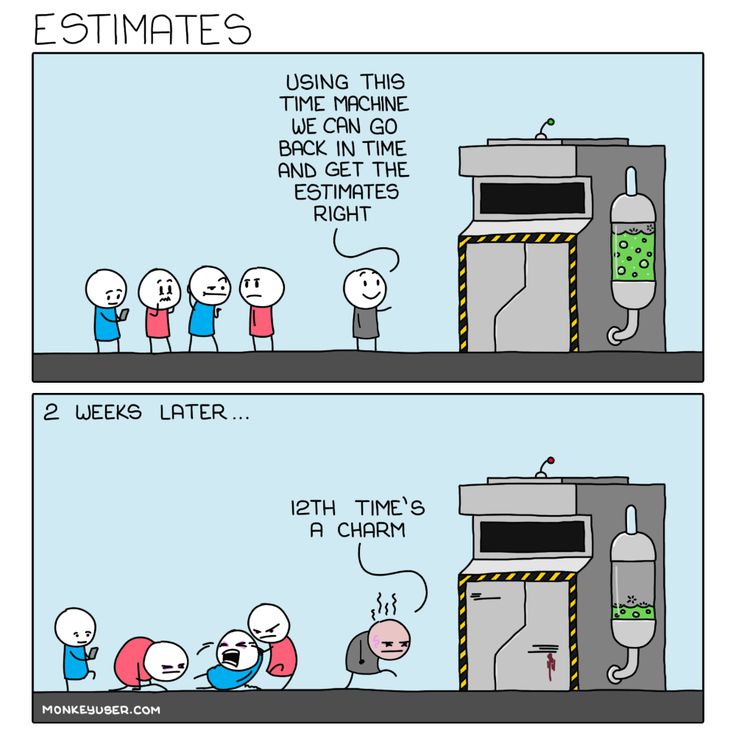
Some estimation techniques you can use:
Planning Poker
A popular technique for estimates in agile development is Planning Poker. In Planning Poker, each team member receives a set of cards, each representing a different effort point value, for example Fibonacci: 1, 2, 3, 5, 8, 13. The team discusses a task, and then each member selects a card that represents their effort estimate. The cards are revealed at the same time to avoid influence between team members. If the estimates vary significantly, the team discusses their reasons and holds another voting round until they reach consensus.
Things to watch: It is important to avoid letting more experienced team members unduly influence the estimates of others. Also, long discussions can be counterproductive; it is important to know when to reach consensus and move forward.
T-Shirt Sizing
Another approach is T-Shirt Sizing, where tasks are classified into categories based on T-shirt sizes (XS, S, M, L, XL), representing the complexity or effort required. This approach simplifies the discussion about complexity and effort without getting tied to exact numbers, making it easier for all team members to reach a shared understanding.
It is especially useful in the early stages of planning, when there are still many uncertainties. It helps the team quickly classify tasks in terms of relative effort and complexity.
Things to watch: Be careful not to become dependent on this approach for fine-grained estimates, since the lack of detail can lead to surprises during the project. It is recommended to refine these estimates as more information becomes available.
Three-point method
This technique involves giving each team member a limited number of “points” that can be allocated to different tasks or resources based on their estimate of importance or effort. After everyone votes, the tasks are prioritized based on the number of points received.
It makes it easier to prioritize tasks and resources quickly, based on the collective wisdom of the team. It is especially useful for quickly identifying which tasks need immediate attention.
Things to watch: Voting can be influenced by the majority opinion, potentially ignoring valuable insights from team members with unique perspectives. Make sure the discussion happens alongside the voting to capture those insights.
The Importance of Correctly Interpreting Metrics and Estimates in Agile Development
Correctly interpreting metrics and estimates is fundamental in agile software development. These metrics provide valuable data about team and project performance, making it possible to identify areas for improvement and make informed decisions. In this section, we’ll highlight the importance of interpreting these metrics correctly and explain how to use them to get relevant insights.
Analyzing Metrics Together with the Team’s Experience and Knowledge
When interpreting metrics, it is important to keep in mind that they should not be considered in isolation. They should be analyzed together with the team’s experience and knowledge. For example, if the velocity metric indicates that the team is delivering fewer stories than expected, it is important to investigate the reason behind that result. The team may have faced unexpected obstacles or underestimated the complexity of some tasks. Correctly interpreting metrics requires deeper analysis and an understanding of the context.
Metrics as Tools for Decision-Making
It is also important to understand that metrics are only a tool to support decision-making. They should not be treated as absolute truth, but as indicators that can provide valuable insights. For example, a code quality metric may indicate that the team is facing maintainability problems and should invest in technical improvements. However, the interpretation of this metric should be combined with the team’s analysis, which may identify other factors contributing to low code quality, such as tight deadlines or lack of technical knowledge.
Selecting the Relevant Metrics for the Project
Correctly interpreting metrics also involves identifying the metrics that are relevant to the project in question. Not all metrics apply to every project. It is important to select the metrics that are most relevant to the project’s success and focus on them. For example, in a project with tight deadlines, the lead time metric may be more relevant than the code quality metric. Correctly interpreting metrics requires a deep understanding of the project’s needs and goals.
Software metrics and estimates are vital components in agile development, providing the means to measure progress, predict outcomes, and make decisions. Remember, the key to success is careful application and constant review of these practices to make sure they continue to serve the goals of the team and the project.