Tech Lead vs. Engineering Manager: understanding the differences in team roles
 Edvaldo Freitas
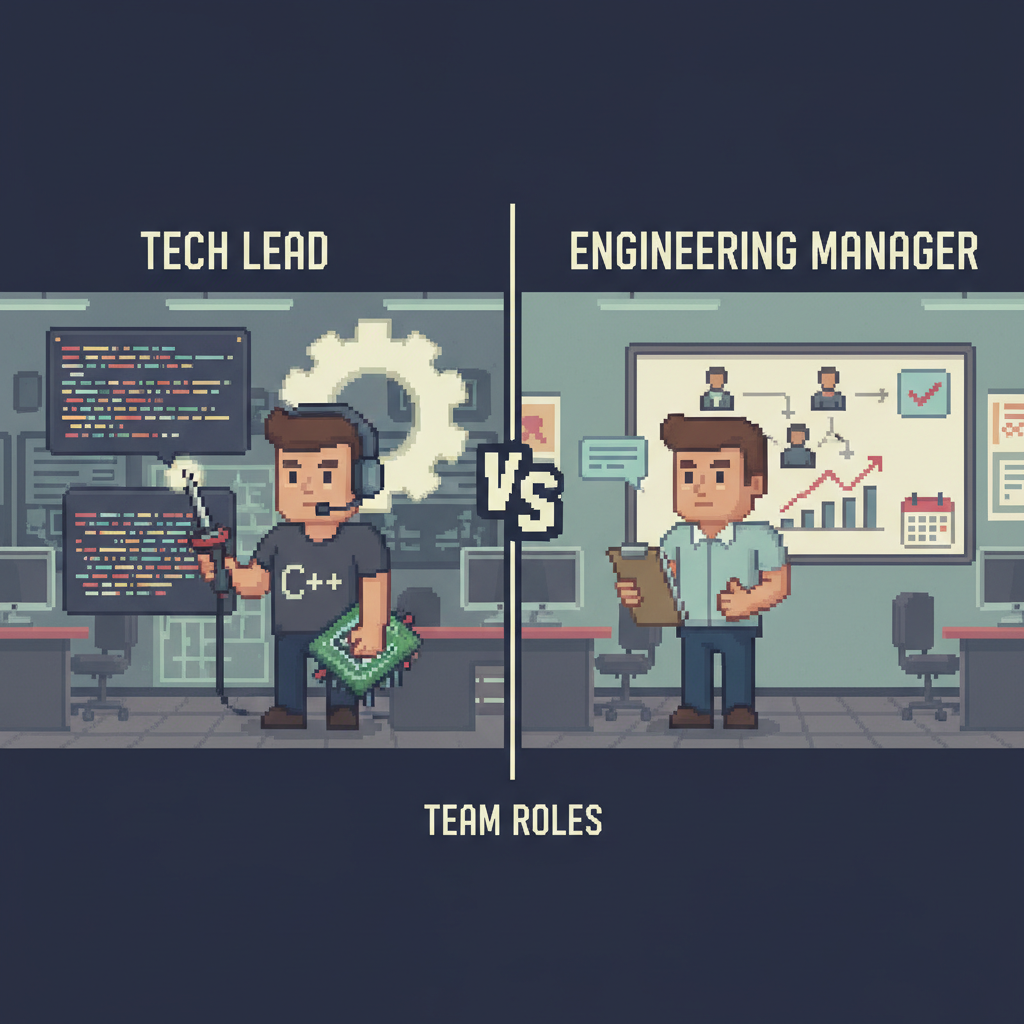
What happens in many engineering teams, especially as they grow, is that the line between technical leadership and people management becomes incredibly blurry. The most senior engineer often ends up taking on both roles: being the final word on system architecture while also trying to handle performance reviews and career conversations. This creates a confusing situation where the distinction between tech lead vs manager isn’t clear, because a single person is trying to be both.
At first, this combination can even seem efficient. But as the team grows from five to fifteen, then to fifty people, the problems start to show.
The person in this hybrid role becomes overloaded. Either the technical vision becomes inconsistent because they’re buried in management tasks, or the team feels unsupported because their manager is too focused on code to properly handle people issues.
This ambiguity isn’t just an individual problem, it starts to turn into a company bottleneck. It leads to burnout for the person stuck in the middle and makes it very hard for other senior engineers to see a clear career path for themselves. Do they need to become managers in order to lead technically, or can they keep focusing on code? Without clear roles, no one knows.
Main Differences Between Tech Lead vs Manager
To solve this, you need to be specific about what each role is actually responsible for. While both are leaders, they operate on different planes and use different tools to get the job done.
The Tech Lead’s Main Focus: The System
The Tech Lead’s world revolves around the health and direction of the technology. Their primary responsibility is the codebase, the architecture, and the technical quality of what the team builds.
Technical vision and system architecture: They are responsible for defining the technical direction of a project or system. This means making hard decisions about architecture, patterns, and technologies to ensure the system is scalable, maintainable, and reliable.
Implementation guidance: They are in the code every day. They guide the team through complex implementation details, review critical pull requests, and establish good coding practices, testing, and deployment.
Technical mentorship: They grow other engineers by coaching them on technical skills. This happens through pairing, code reviews, and design discussions. The goal is to raise the technical bar of the entire team.
Code quality and reliability: At the end of the day, the Tech Lead is accountable for the quality of what the team ships. They ensure the code meets standards and that production systems are stable.
The Engineering Manager’s Main Focus: People and Process
The Engineering Manager, on the other hand, is focused on creating an environment where the team can do their best work. Their primary responsibility is the people on the team and the organizational systems that support them.
People management and career development: They run one-on-ones, performance reviews, promotions, and compensation conversations. Their job is to help each engineer build a satisfying career path.
Team health: They are responsible for team dynamics. This includes resolving conflicts, ensuring psychological safety, and building a culture where people can collaborate effectively.
Project delivery and stakeholder communication: While the Tech Lead handles the “how,” the EM usually handles the “when” and the “why.” They manage timelines, remove blockers, and act as the main communication link between the team and stakeholders like product managers or other departments.
Resource allocation and process improvement: They work on hiring, team structure, and making sure the group has what it needs to succeed.
Where They Overlap and Where They Differ
Both, obviously, care about delivering great software. The main difference lies in the lever each one pulls to make that happen. A Tech Lead pulls the “technical excellence” lever, influencing the team through architectural decisions and code quality. An Engineering Manager pulls the “team effectiveness” lever, influencing through career growth, clear processes, and a healthy culture.
Both contribute to technical strategy, but from different angles. The TL might propose a new database technology based on performance needs, while the EM will raise questions about the hiring and training costs associated with that choice. Success depends entirely on these two roles having a strong partnership and good communication.
A Simple Model to Understand the Roles
For senior engineers at a decision point, or for organizations trying to define these roles, having a clear mental model helps.
The “Impact Vector” Model
One useful way to think about this is the “Impact Vector” model. Imagine your contribution to the team as a vector, with direction and magnitude.
The Tech Lead’s impact vector points directly at the technical domain. They create value by making the right architectural choices, improving code quality, and solving the hardest technical problems. Their influence scales through the systems they design and the technical excellence they encourage in others.
The Engineering Manager’s impact vector points directly at the organizational domain. They create value by hiring the right people, developing their careers, and tuning team processes. Their influence scales by building a high-performing team that can operate efficiently and autonomously.
The goal is to have both vectors working together, not to force a single person to point in two directions at the same time.
How to choose your path
If you’re a senior engineer trying to decide which path to follow, the polished job description won’t help you. Instead, ask yourself where you get more energy and where you feel you can have the greatest impact.
1 – Do you feel more satisfaction refactoring a complex module to make it cleaner and faster, or guiding a mid-level engineer through a tough feedback conversation that helps them grow?
2 – When a project is going off the rails, is your first instinct to dive into the code to find the bottleneck, or to reorganize the team’s work, align priorities with product, and shield the team from distractions?
3 – Where do you feel your biggest impact lies: in the long-term health of the codebase, or in the long-term health and growth of the people who build it?
There’s no right answer, but being honest about your main motivation is the most important step.
How the two can work together
When a company separates these roles clearly, the partnership between the Tech Lead and the Engineering Manager becomes the most important relationship on the team. But for that to work, a few basic rules are needed.
Set clear boundaries and regular syncs
TLs and EMs should meet frequently to align on technical and team topics. They need to agree on who is primarily responsible for each type of decision. For example, the TL decides on technical architecture, while the EM decides on performance reviews.
They need to trust each other.
The EM needs to trust the TL’s technical judgment, even if they don’t agree with every detail. The TL needs to trust the EM’s judgment on people and processes. Neither should try to do the other’s job.
By treating these roles as distinct but complementary forms of leadership, the company ensures that both the technology and the people get the attention they need to grow.