What is Code Review? Process, Best Practices, and How AI Code Review Works
 Edvaldo Freitas
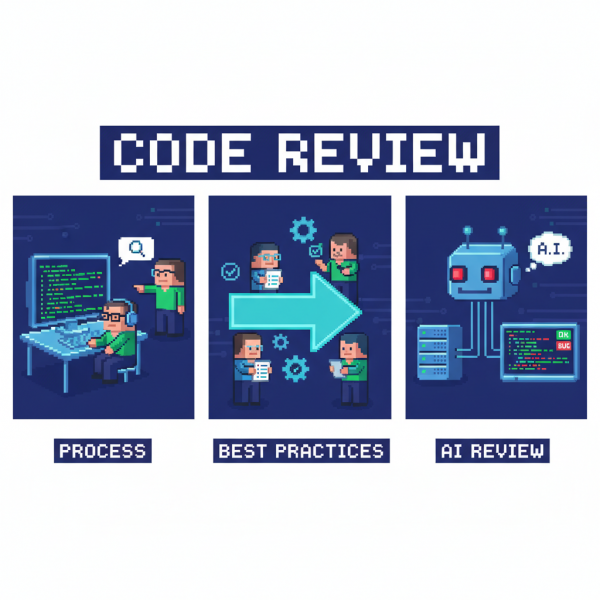
Code review is often the biggest bottleneck in development. We treat it as a required quality gate, but the process is usually broken. We ask “What is code review for?” and answer with a process that creates more friction than value. Developers wait hours or days for feedback, only to get comments about variable names while a serious logic flaw slips through. Under pressure to ship, reviewers give a quick “looks good to me” without going deep, which completely defeats the purpose.
The manual and inconsistent process slows everything down. It wastes developer time on minor suggestions, creates a backlog of pull requests, and lets conflicting standards spread across the codebase. Everyone is busy, but the work isn’t improving the system. It’s a tax on delivery speed with almost no return.
Why manual code review becomes a bottleneck
The manual review process doesn’t match how development works today. A reviewer trying to balance their own code, meetings, and a queue of pull requests can’t give each change the attention it deserves.
That leads to some common issues. When someone has 30 minutes to review a 1,000-line change, they skim, and errors slip through, like an off-by-one or an unhandled case. Code standards depend entirely on who is reviewing; one engineer might be strict about immutability while another doesn’t even check it, leading to a codebase with conflicting patterns. A large part of review feedback is about style or formatting, and those discussions waste time for both the author and the reviewer. This back-and-forth on small things, combined with waiting time, causes pull requests to stay open too long, delaying features and increasing the risk of merge conflicts.
What is code review actually for?
To fix the process, we need to be clear about the goal. Code review is more than catching bugs before they reach production. If that were the only goal, better tests would be enough. The real value is in the parts of software quality that automated tests can’t cover.
Understanding the real value of code review
A good code review process helps manage the complexity of a system built by a team. It’s a second set of eyes on logic, security, and architectural decisions, especially where mistakes are expensive later.
It’s also one of the best ways to share knowledge. Reviewers learn about parts of the system they don’t usually touch, and authors have to explain their reasoning. That exchange reduces silos.
At the end of the day, code has to fit into the rest of the system. Human reviewers are key to making sure a change follows design patterns and doesn’t introduce a dependency that will cause problems later.
The limits of human-only reviews
Even with a clear purpose, a purely manual process runs into the limits of human attention. Relying on people for every check is slow and unreliable.
Where human attention breaks down
Humans are good at abstract reasoning, but not at repetitive, detail-heavy tasks, especially under pressure. That makes them a poor fit for much of what traditional code review requires.
A human reviewer won’t catch every use of a deprecated function in a large change because attention drifts. A pull request with dozens of files is hard to review well, so people end up focusing on a few parts or giving a more superficial approval. Different engineers also have different opinions about code style, and those personal preferences often dominate discussions, slowing progress on things that don’t have a clear right answer. And when senior engineers become the mandatory review point, it doesn’t take long for them to become a bottleneck for the rest of the team.
How AI tools can help
AI-assisted code review automates the repetitive, pattern-based work that humans are bad at. This frees developers to focus on higher-level analysis, where they add the most value. These tools act as a first, objective, tireless reviewer on every commit.
What AI reviewers analyze
These tools integrate directly with code hosting platforms like GitHub and run automatically when a pull request is opened. They provide feedback within a minute or two, usually as comments on the PR itself.
The checks go beyond basic linting. They can identify code smells, overly complex functions, and patterns that go against team-specific best practices. They can also detect common security issues like SQL injection or unsafe dependencies before code reaches production. Some tools can even spot performance problems, like N+1 queries, and suggest better approaches.
The new workflow with an AI assistant
When you introduce an AI tool into code review, the process changes. It analyzes all code consistently, without fatigue or skipping basic issues. Developers get feedback immediately and fix the most common problems before anyone else looks.
The pull request arrives cleaner for the reviewer, who can focus on what matters, like business logic and architectural alignment. This new workflow with an AI assistant lets engineering teams redesign how they work.
How to get started with AI code review
You can’t just turn on an AI code review tool and expect everything to work. You need a clear plan to make sure it reduces noise instead of adding more.
A practical way to start
First, define a clear goal. What problem are you trying to solve? It could be reducing time spent on style comments or catching more security issues earlier. A good starting point is “reduce code style-related comments by 90% within a quarter.” Then choose a tool that fits your current stack, like Kodus, which reviews directly inside your Git workflow. If developers have to leave their workflow, they won’t use it. You also need to teach the team how to read AI feedback. Engineers should understand when to apply a suggestion and when to ignore a false positive. Finally, give the team control to configure rules that match how they work.
Combining human review and AI
The best approach combines automation with human review, each handling what it does best. Let AI take care of style, formatting, and known patterns, and treat that as a team rule. Reviewers no longer spend time on those comments; the bot becomes the source of truth for those checks.
With that, the reviewer’s role shifts. Attention moves to what actually matters: whether the code solves the business problem, aligns with the architecture, and handles failure cases properly.
Over time, the team should also tune what the tool flags. Turn off what generates too many false positives and add rules that reflect how your team actually works.
What humans are still responsible for
With AI handling the repetitive work, reviewers can focus on decisions that require deeper thinking and help keep the system healthy over time.
What only a person can evaluate
Automation can check if code is correct, but it takes a person to know if the code is right. That requires human context. A person understands the long-term technical vision and can spot when a change, even if it works, introduces a dependency that conflicts with that direction. Someone with domain knowledge can see when code technically satisfies a ticket but misses the real business intent. Code review is also a strong learning tool. A more senior engineer can use it to explain concepts or suggest alternative approaches, helping a junior engineer grow. And most importantly, a person can judge when a solution is too complex or hard to maintain, even if it passes every automated check.
How to get more value from human review
For this shift to work, teams need to adopt a few habits. The most important is reinforcing small, focused pull requests. If a PR is too large to review in 15–20 minutes, it’s too large to merge. Teams also need a positive, learning-oriented review culture. Feedback should come from the assumption that everyone is trying to build the best product, not criticize the author. Finally, be clear about what human review should cover. Create a simple checklist in the PR template that directs focus to logic, architecture, and maintainability, with the understanding that AI has already handled the rest.