How to implement DevOps without creating more complexity
 Edvaldo Freitas
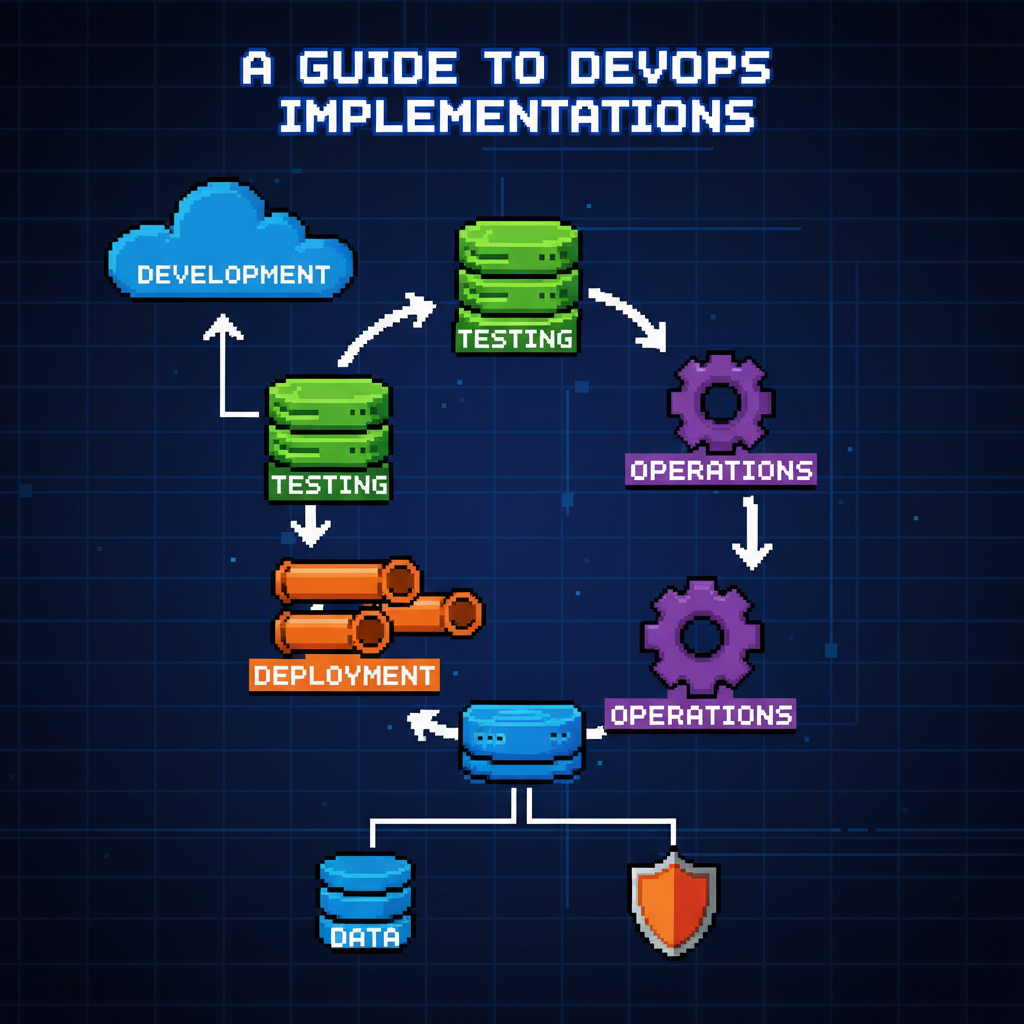
Most large DevOps projects fail to deliver results. They usually start with a new tool or with a top-down directive to “be more agile,” but they rarely solve the real problems that are slowing down software delivery. Teams end up with complex CI/CD pipelines that only automate a broken process, or with Infrastructure as Code that provisions inconsistent environments. Instead of faster and more reliable releases, everyone just ends up frustrated. Everything goes wrong because people start from the solution instead of starting from a specific and expensive problem.
The mismatch in adopting new practices
The desire to adopt a new tool is often the starting point. A platform team builds an internal deployment system, only to discover that product teams won’t use it. The reason is usually simple. The new tool solves the platform team’s problem, but creates new problems for the product team. Maybe it requires a major rewrite of the application’s deployment logic or imposes a workflow that simply doesn’t fit how the team operates.
That is why migrations done all at once usually fail. Forcing every team to adopt a new CI system or a standard Kubernetes platform by a specific date almost always creates resistance. Teams with stable legacy systems are pushed to do high-risk work with low return. Teams with tight deadlines see the directive as a distraction. If they don’t see an immediate benefit to their own work, the new system is just extra overhead.
Many times we also measure success in a way that is disconnected from reality. Deployment frequency is a popular metric, but it can be misleading. A team might deploy 20 times a day, but if the lead time from commit to production is still five days because of slow manual QA and long review cycles, the real bottleneck is still there. You only sped up the final, automated step. Real improvement comes from measuring lead time, change failure rate, and mean time to recovery (MTTR), which show the health of the delivery process as a whole.
Why good intentions fail: understanding resistance
When people resist change, there are usually good technical or organizational reasons behind it. No one is against something new just for the sake of opposing it.
Established workflows are hard to change. A senior engineer who knows exactly how to manually deploy a critical service tends to see a new automated system as a risk. The current process, even if it is slow, is predictable. A new pipeline that the team does not fully understand yet can fail in ways that are hard to diagnose. The resistance comes from the need for stability.
Skill gaps are another major obstacle. You cannot ask a backend team that has always depended on a central ops team to suddenly start writing and maintaining its own infrastructure configuration. That requires training, time to learn, and a manager willing to accept a few mistakes along the way. Without that time and support, teams will go back to the old methods because they are faster and safer in the short term.
A lack of clear leadership sponsorship can also kill any new initiative. If engineering managers do not protect the team’s time to learn and adapt, this work will always be pushed aside in favor of features. When leadership celebrates feature releases but ignores engineering improvements, the message is clear. The initiative dies from neglect.
Focus on outcomes, not practices
Instead of saying “We need to adopt Infrastructure as Code,” ask: “What is the most expensive problem in our delivery process?” Cost is not just money. It is developer time, delayed releases, and production incidents.
Look for places where a small change can generate a large impact.
- An unstable end-to-end test environment that takes hours to spin up might be a bigger problem than deployment speed. Fixing that can free up more developer time than any new CI tool.
- A manual database schema migration process that requires coordination between three people is an obvious bottleneck. Automating that single step might be the most valuable project you can take on.
This way, engineering work becomes tied to something the business actually values. Reducing the time to fix a production bug from four hours to 15 minutes is a clear win for everyone. It is a much simpler conversation than discussing the abstract benefits of a specific tool.
Define and measure success
To get buy-in for this type of work, you need to connect the initiative to measurable metrics. Before starting anything, establish a baseline.
If you cannot measure the problem, you cannot prove that you solved it.
For a problem like “Staging environments are always broken and out of sync with production”:
- Baseline: It takes two days to provision a new staging environment. We receive 25 support requests per month related to staging issues.
- Goal: A developer can provision a new production-like environment in less than 30 minutes. Staging-related requests drop by 90%.
For a problem like “Hotfixes for critical bugs take hours to reach production because of manual tests and release checklists”:
- Baseline: Our mean time to recovery (MTTR) for P0 incidents is 4.5 hours.
- Goal: We can get a hotfix into production within 20 minutes after the code is merged. Our MTTR drops below one hour.
When you communicate these numbers to stakeholders, an internal engineering project starts to be seen as a visible business improvement. The conversation stops being about cost and becomes about investment.
A step-by-step approach to improving
A successful rollout is a sequence of small wins, not a single massive project. First, understand where your teams are today. Some may have excellent CI setups, while others still deploy manually via FTP. A single plan for everyone will fail. The idea is to find the biggest bottleneck for a team or service and solve that point. Then you find the next bottleneck.
A simple way to move forward
Here is a path to get started.
Step 1: Find the biggest source of delay.
Sit down with a team and map the entire process from commit to production. Where does work get stuck? Waiting for code review? A QA environment? Manual approval from another team? Identify the biggest waiting time. For example, a team may realize that their two-week sprints are always delayed because getting a new database instance from the DBA team takes, on average, four days. That is where you start.
Step 2: Define a specific and measurable goal.
Based on the delay you identified, define a clear outcome. Using the database example, the goal might be: “Any developer on the team can provision a new database for testing in less than 10 minutes without opening a ticket.”
Step 3: Choose the smallest change that works.
What is the simplest tool or process change that achieves the goal? Maybe you do not need a full self-service cloud platform. The first step could be a set of standardized and versioned scripts, reviewed and approved by the DBA team. This moves the process from a manual ticket-based flow to an automated code-based flow. That is Infrastructure as Code used as a solution to a specific problem, not as an end in itself. In the same way, you can introduce CI simply by automating the unit tests that everyone should already be running locally.
Step 4: Run a pilot with one team.
Choose a team that feels the pain and is willing to experiment. Do not start with the most critical system or the most skeptical engineers. You want a quick win to learn from the process and generate momentum. That pilot team becomes your first success case.
Step 5: Measure, learn, and repeat.
After the pilot, go back to the baseline metrics.
Did you reach the goal?
Did the change create new problems?
Maybe the self-service database scripts worked, but now developers forget to deprovision them and costs are rising. That is just a new problem to solve. This feedback cycle is what actually drives improvement over time.
How to maintain progress
As more teams adopt new practices, the risk of fragmentation appears. If every team builds its own deployment pipeline or writes its own infrastructure modules, you create a maintenance nightmare. This is where some patterns come in.
The goal of governance is to make the right way the easiest way.
This usually becomes the responsibility of a platform team or internal engineers who build improvements for others to use.
- Shared pipeline templates: Provide preconfigured CI/CD templates for common application types (such as a Go backend or a React frontend). A team can have a secure and efficient pipeline running in minutes instead of weeks.
- Reusable infrastructure modules: Create a library of versioned IaC modules for standard resources such as databases, caches, and load balancers. This ensures consistent and security-approved configurations.
- Clear ownership: Define who is responsible for each part. Does the product team own the application pipeline end-to-end? Does the platform team own the build infrastructure? Lack of clarity about responsibilities leads to systems that no one maintains.
This approach gives teams the freedom to move quickly using the standard paths, while the platform team ensures stability for the entire organization.
You avoid both the chaos of everyone doing their own thing and the bottleneck of a central Ops team that has to approve every change. The only way to keep this working is to keep listening to what teams need and constantly improve the standard paths they use in their day-to-day work.