The 5 Best Codacy Alternatives in 2026
 Edvaldo Freitas

Teams looking for Codacy alternatives usually have a specific problem they want to solve. The goal isn’t just to swap one static analysis tool for another. Instead, they want to improve code review, reduce noise from automated checks, integrate tools more smoothly into developer workflows, or find a more modern approach that understands code context. This guide looks at the best options for different engineering needs, focusing on what actually helps when you’re trying to ship reliable software.
What is Codacy?
Codacy is an automated code analysis platform. It checks for quality, security, and style issues. It integrates with Git repositories to analyze commits and pull requests, reporting problems based on many predefined and custom rules.
Teams often use Codacy when they need a central way to enforce coding standards and maintain a baseline of code health. Codacy provides broad, multi-language static analysis coverage and generates high-level dashboards for engineering managers to track quality metrics and technical debt over time.
Its limitations can appear in teams with more robust development practices. The feedback sometimes lacks deep code context. This leads to suggestions that are technically correct but practically unhelpful. Developers might see this as noise, slowing down the review process. Customizing its behavior to fit specific team conventions or complex architectures can also be difficult.
Why teams look for Codacy alternatives
When an engineering team starts evaluating other tools, it’s often because of a bottleneck in their daily workflow. The reasons usually involve a few concerns, such as:
- Noise and context awareness. Many static analysis tools generate a high volume of low-impact warnings. Developers quickly learn to ignore these, which defeats the tool’s purpose. Teams start looking for alternatives that provide higher-signal feedback, understanding the context of a change to avoid reporting trivial or irrelevant issues.
- Limited customization. A team’s coding standards are often detailed and unique to their domain. If a tool makes it hard to write custom rules or requires a specialized query language, it creates a bottleneck. The ability to define standards in a simple, accessible way—like using natural language—becomes a major factor in choosing a tool.
- Workflow integration. A code quality tool should feel like a helpful assistant, not another bureaucratic barrier. If it adds awkward steps to the CI pipeline or clutters pull requests with unhelpful comments, developers might reject it or find ways around it. Better integration means feedback appears where developers already work, such as inside the IDE or with clear, useful PR comments.
- Deployment and data privacy. For many organizations, especially those in regulated industries or with strict intellectual property policies, sending source code to a third-party SaaS provider is not an option. The need for self-hosted or hybrid deployment models often drives the search for alternatives.
Codacy: a quick summary
Pros:
- Wide language support and many ready-to-use rule sets.
- Good for setting a baseline of code quality across an organization.
- Dashboards effectively track metrics and technical debt from a management perspective.
Cons:
- Can generate a lot of noise, leading to alert fatigue for developers.
- Rule customization may be less adaptable than newer alternatives.
- Feedback might not have the deep, repository-wide context needed to be truly helpful.
Best Codacy alternatives
Here’s a look at the top alternatives, chosen for engineering teams that prioritize practical results and developer experience.
1. Kodus
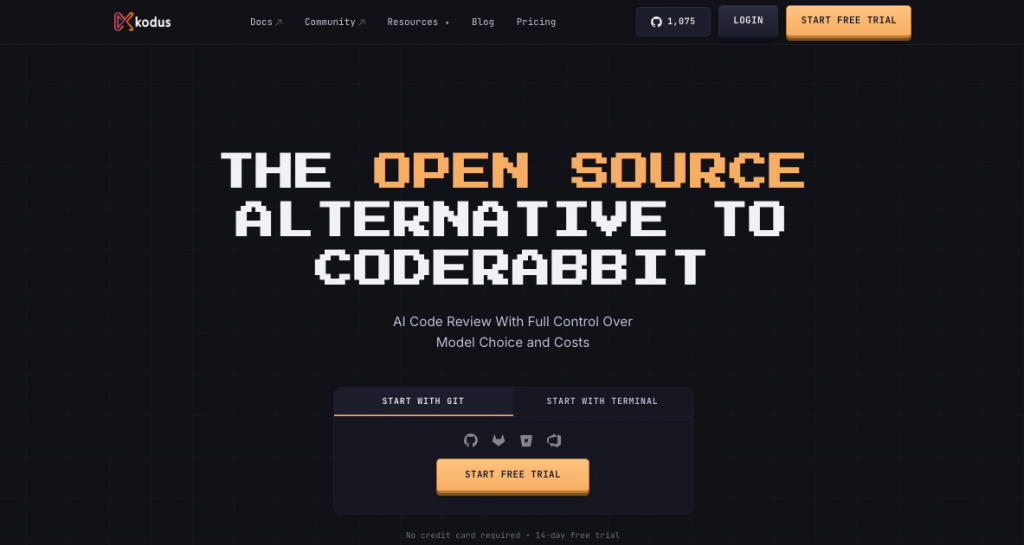
Kodus is an open-source AI code review platform built for teams that want code reviews to align with how engineering actually works. Instead of just looking at the diff, it reviews changes with repository-wide context, which tends to yield more useful comments in larger codebases and complex systems. Another key differentiator is the level of control: the team can create their own rules, configure behavior on a per-repository basis, and fit the tool into the existing pull request workflow without reinventing the process.
Best for: Teams that want detailed customization, low-noise feedback, and control over their data and AI models.
Strengths:
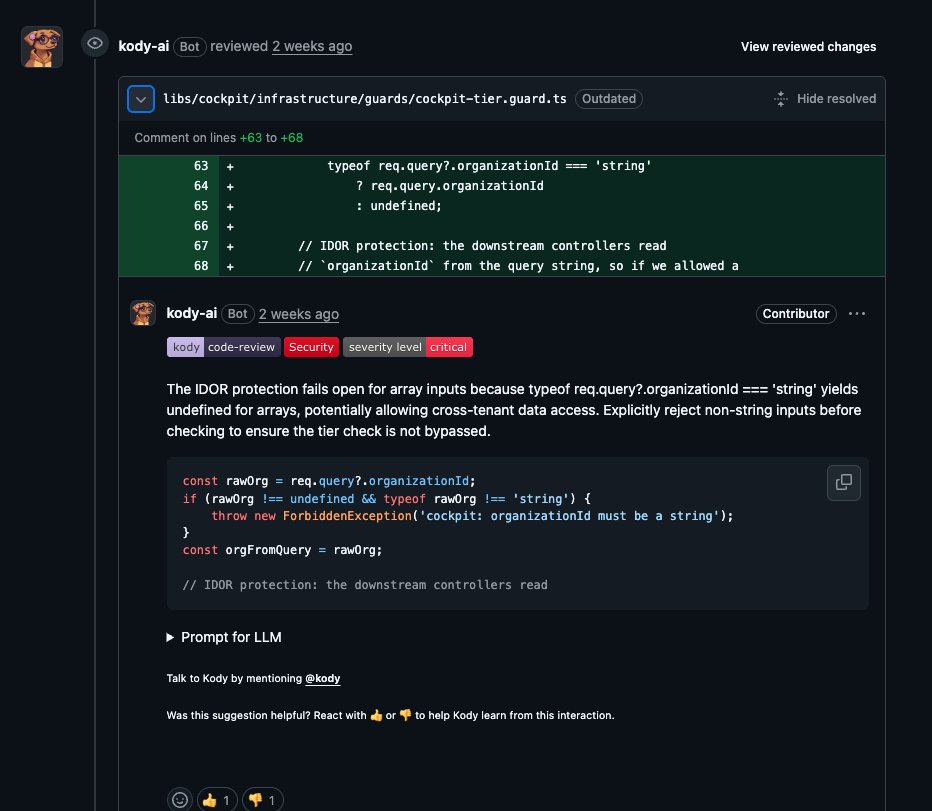
- Repository-level context. Kodus combines semantic analysis with code search to locate the right context within the repository, reviewing changes while factoring in surrounding files, patterns, and rules. This makes a difference when the risk isn’t in the diff itself, but in the API contract it touches, the directory it sits in, or the patterns that specific module already follows. Instead of commenting as if each PR exists in a vacuum, the review aligns with the actual structure of the codebase, yielding more useful insights in large codebases, monorepos, and areas with differing rulesets.
- Natural language custom rules. Every team has its own engineering rules—whether it’s a pattern for migrations, API versioning conventions, observability criteria, or specific precautions in sensitive areas of the system. Kodus excels in these scenarios because it lets you turn these guidelines into review instructions that pull repository context. Instead of forcing the team to accept generic “best practices” defined by the tool, it ensures the review reflects the actual standards the team uses daily.
- Model-agnostic and BYOK. A common issue with these tools is that the AI layer becomes a black box: you can’t easily choose the model being used, you can’t control behavior shifts, and you lose visibility into costs and data handling. Kodus takes the opposite approach. It lets you bring your own key (BYOK) and choose the provider that makes the most sense for your team, giving you predictability over quality, cost, and security requirements. For teams with genuine compliance or privacy concerns, this level of control is a prerequisite.
- Enterprise-grade deployment: Kodus also stands out for teams with strict security and governance needs, offering SOC 2 Type II compliance alongside features like SSO, audit logs, and a self-hosted option.
Possible limitations:
- Kodus is ideal for teams that want to configure reviews with precision. Those looking for an out-of-the-box, highly standardized experience might prefer a more rigid platform from day one.
Pricing: Kodus offers three tiers. The Community plan is free and works via BYOK. The Teams plan is $10 per active developer per month, with token costs billed separately by your chosen AI provider. The Enterprise tier features custom pricing.
My take: Kodus is the best choice for teams that find traditional static analysis tools too noisy and inflexible. Its adaptability in rule creation, deployment, and model choice gives platform and developer experience teams the power to build a code quality system that developers actually trust and use.
2. CodeRabbit
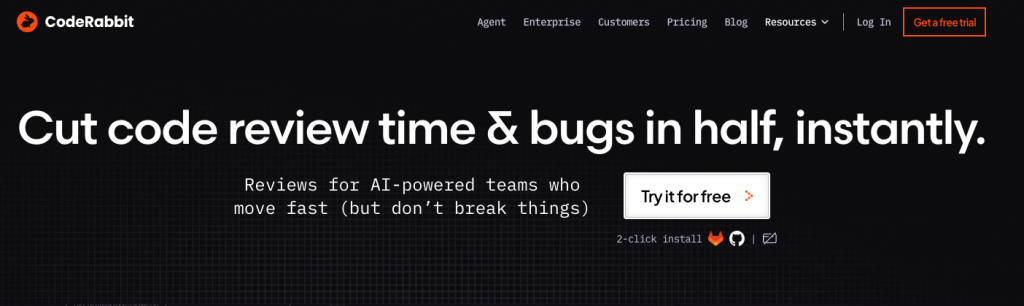
CodeRabbit is an AI-native code review tool that focuses heavily on providing detailed, contextual feedback directly within pull requests.
Best for: Teams focused on speeding up pull request reviews and improving the quality of feedback within that workflow.
Strengths:
- Analyzes pull requests with deep context.
- Creates detailed PR summaries and suggests one-click fixes.
- Provides incremental reviews on subsequent commits, reducing comment spam.
Possible limitations:
- Focuses primarily on the pull request workflow, with less emphasis on full repository governance or compliance reporting.
- Customization relies on documents and style guides rather than direct, actionable rule definitions.
Pricing: CodeRabbit lists its Pro plan at $24 per developer per month billed annually, or $30 month-to-month. Enterprise pricing is customized.
My take: CodeRabbit is a good option for smaller teams that want to make their pull request process faster and more effective using AI.
3. Greptile
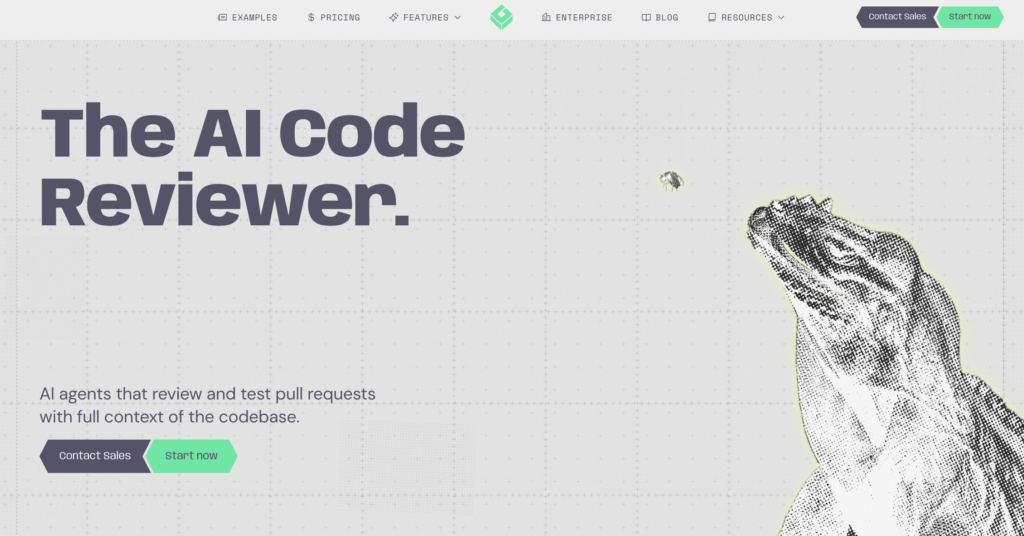
Greptile is an AI code review agent that takes a unique approach by building a graph representation of a repository. This lets it understand relationships between functions, classes, and dependencies, providing reviews with deep codebase context. It aims for a very high signal-to-noise ratio.
Best for: Teams working on complex codebases where understanding deep relationships and architectural impact is vital during review.
Strengths:
- Graph-based context. Its ability to map the entire codebase helps it catch subtle logic, security, and performance issues that other tools might miss.
- Learns from feedback. The system adjusts based on team feedback (approvals, fixes, comments) to improve its suggestions over time.
Possible limitations:
- It is more limited than Codacy if you want a single platform for security, coverage, and governance.
- Its value is clearer for teams already heavily invested in GitHub or GitLab workflows.
- The rules learned implicitly by the system can feel less clear and controllable than rules you define directly.
Pricing: Greptile lists a Pro plan at $30 per seat per month, which includes 50 code reviews per seat, alongside custom Enterprise pricing.
My take: Greptile is a good alternative to Codacy when the real driver behind your purchase is review depth and context rather than organization-wide analysis breadth.
4. DeepSource
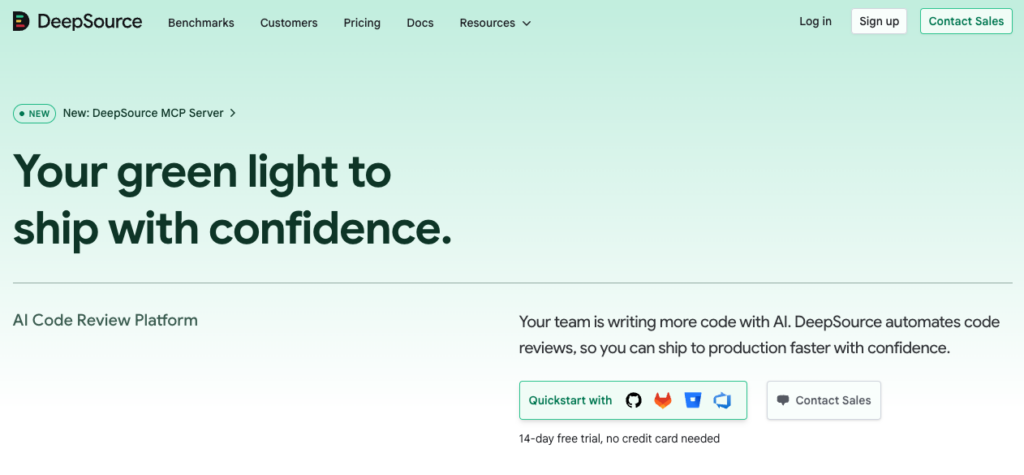
DeepSource is a DevSecOps platform that combines traditional static analysis with AI features. It offers a unified solution for code quality, security (SAST, SCA, secrets detection), and automated remediation. It aims to provide highly accurate findings with very few false positives.
Best for: DevSecOps teams looking for a single, integrated platform to manage code quality and security across the development lifecycle.
Strengths:
- Supports GitHub, GitLab, Bitbucket, and Azure DevOps.
- Combines static analysis, coverage, AI code reviews, and supply chain checks.
Possible limitations:
- While it includes an AI layer, its core remains rooted in static analysis. This means its capacity to understand abstract business rules or custom team conventions is more limited than tools built entirely on AI.
Pricing: DeepSource lists its Team plan at $30 per contributor per month, or $24 per contributor per month billed annually. Enterprise pricing is customized.
My take: DeepSource is a refined, reliable platform that effectively balances traditional static analysis with modern AI features. For many teams, it represents a major step forward from Codacy in terms of actionable feedback and automation.
6. SonarQube
SonarQube has been a leader in the code quality space for a long time. It’s an open-source platform (with commercial editions) for continuous inspection of code quality. It performs deep static analysis to detect bugs, vulnerabilities, and code smells, and you can configure it extensively.
Best for: Large enterprises, especially those in regulated industries, that need a central tool to ensure compliance and manage code quality across numerous applications.
Strengths:
- Deep static analysis engine. Its analysis capabilities are mature and comprehensive. It supports many languages and integrates with various build systems.
- Extensibility and customization. Teams can create custom quality profiles, write their own rules, and integrate SonarQube deeply into their CI/CD pipelines and governance workflows.
- Technical debt modeling. It offers detailed metrics and visualizations for tracking and managing technical debt over time.
Possible limitations:
- High operational overhead. The self-hosted version requires significant effort to set up, maintain, and tune. It isn’t a simple plug-and-play solution.
- Can be slow. Full-repository analysis can take a long time, which might slow down CI pipelines if not configured carefully.
- Older user experience and workflow. While powerful, the workflow can feel less modern and developer-centric compared to newer, AI-native tools.
Pricing: Paid plans start at $32 per month.
My take: SonarQube is a powerful tool for top-down governance. If you primarily need auditable compliance reports and quality gates managed by a central platform team, it leads the market. However, developers often favor it less, finding it slow and rigid.
Comparison of Codacy alternatives
| Tool | Context beyond the diff | How rules and standards enter the review | Deployment | Pricing |
|---|---|---|---|---|
| Kodus | High. Uses repository context with semantic analysis and code search, rather than just reviewing an isolated patch. | Kody Rules in natural language, featuring per-repo configuration to accurately reflect real team conventions. | Cloud and self-hosted | Free Community tier. Teams plan at $10/active dev/month + tokens. Custom Enterprise quotes. |
| CodeRabbit | Medium. Offers PR context and strong workflow presence, but focus is highly concentrated on what happens within the pull request itself. | Configuration via files and style guides, oriented more toward PR flow than deep, code-contextual rules. | Cloud | Pro at $24/dev/month annually or $30 monthly. Custom Enterprise quotes. |
| Greptile | High. Designed to review with a deeper structural view of the base, including component relationships. | Learns from feedback and configuration, with less emphasis on declarative rules versioned directly by the team. | Cloud and enterprise options | Pro at $30/seat/month, including 50 code reviews per seat. Custom Enterprise quotes. |
| DeepSource | Medium. Provides useful context, but the core remains closer to a traditional static analysis and DevSecOps platform with AI attached. | Configuration via files and platform policies; behaves more like an analysis engine than a team-shaped review system. | Cloud and self-hosted enterprise | Team plan at $30/contributor/month, or $24/contributor/month annually. Custom Enterprise quotes. |
| SonarQube | Low to medium for contextual review. Strong in broad static analysis, but less oriented toward semantic PR context. | Very strong in static rules and quality profiles, but offers a more traditional and less fluid developer experience. | Cloud and self-hosted | Paid plans start at $32/month, with higher tiers for enterprise features. |
Why Kodus is the best alternative to Codacy
For most experienced engineering teams, the ideal code quality tool offers a balanced approach. It needs to be effective enough to provide meaningful feedback, yet adaptable enough to fit the team’s specific needs without disrupting workflows. This is where Kodus excels.
It was designed to fix the main issues with older static analysis tools: excessive noise and inflexibility. Instead of just offering a better set of predefined rules, it gives you a better way to define your own. The ability to write custom rules in natural language means any developer can codify a best practice unique to your codebase. This shifts the responsibility for quality from a centralized tool to the team itself.
Furthermore, the model-agnostic approach and options for self-hosting or BYOK give you control that other SaaS tools do not. You aren’t tied to one vendor’s AI model or data processing pipeline. This matters for teams that want to fine-tune performance, manage costs, or comply with strict data policies.
The result is a system that produces high-signal feedback, not a barrage of alerts. By understanding repository-wide context, Kodus avoids the simple pattern-matching that leads to irrelevant suggestions. The feedback often reads like observations from a senior engineer, making it a tool developers learn to trust rather than ignore.
Conclusion
Moving away from a tool like Codacy provides an opportunity to find a solution that better fits your team’s workflow and maturity. While traditional static analysis has its place, modern development demands tools that are smarter, context-aware, and respectful of a developer’s time.
For engineering teams that value control, adaptability, and high-signal feedback, Kodus offers a very promising path forward. It combines the power of modern AI with a developer-first approach, letting you build a code quality system that actually helps your team write better software without getting in the way.
FAQs
▾ What is the best Codacy alternative?
For most modern engineering teams, Kodus is a top Codacy alternative. It offers a more adaptable, developer-centric approach with AI-powered, context-aware analysis and natural language rule customization. This directly addresses common problems like noise and inflexibility found in older tools.
▾ Is Kodus a good Codacy alternative?
Yes, Kodus is a strong alternative. It is designed for teams that need more than generic static analysis. Its strengths include providing repository-level context, allowing teams to use their preferred AI models (BYOK), and offering self-hosted options. This makes it a powerful choice for organizations that prioritize control and high-quality feedback.
▾ What should teams look for in a Codacy alternative?
Teams should look for a tool that provides a high signal-to-noise ratio, deep code context, adaptable rule customization, smooth workflow integration (IDE, CLI, SCM), and a deployment model (cloud versus self-hosted) that meets their security and data privacy requirements.
▾ Does Kodus support self-hosted or adaptable deployment options?
Yes, Kodus offers both a cloud SaaS solution and a self-hosted option for enterprises. This adaptability lets organizations maintain full control over their source code and data, which is crucial for compliance and security.