Best Bito Alternatives in 2026
 Edvaldo Freitas

Teams looking for Bito alternatives usually want more than just another AI assistant. They may need to improve how pull requests are reviewed, reduce irrelevant comments, standardize engineering practices, get better AI context, or find a tool that integrates naturally with their current workflow. There are many tools on the market, but each one solves a different problem. This guide explains the best options to help you choose the right one for your team.
What is Bito?
Bito is an AI-based developer productivity platform that combines code review, writing assistance, technical chat, and workflow support. In practice, it works as a unified context layer, called AI Architect, that connects code, repositories, PRs, and management tools like Jira, operating both in the IDE and across Git providers.
The advantages of centralization
The main argument in favor of Bito is its breadth. It solves the problem for teams that do not want to fragment their ecosystem by hiring multiple vendors. In one package, you get:
- Full assistance: Direct IDE support and contextual chat with the codebase.
- End-to-end automation: AI reviews integrated from the local development environment to the Pull Request workflow.
- Visibility: Analytics metrics on the code and the team’s workflow.
The challenges and practical limitations
Because it covers many areas, Bito takes a more generalist approach. If your company has very specific requirements, the situation changes. It is worth analyzing the tool’s behavior across four main areas:
- Standards control: The level of autonomy to customize review rules and how much of that policy can live directly in the repository.
- AI governance: The flexibility to manage costs and choose which LLM models will be used.
- Integration with the current workflow: How smooth the experience is inside PRs compared to the process the team already uses every day.
Why teams look for Bito alternatives
Teams start looking for Bito alternatives when they move beyond generic help with code writing and begin to require more structured, deeper, and more automated workflows.
The most common scenarios that motivate this transition include:
Model flexibility and data control: Cost, compliance, or performance requirements often demand control over which LLMs are used. The ability to use your own API key (BYOK) or host the infrastructure locally (on-premise) often becomes the deciding factor.
Too much noise in PRs: Generalist solutions tend to generate many aesthetic or low-impact suggestions in Pull Requests. This noise distracts reviewers from truly critical issues. The demand here becomes fewer comments, but with higher relevance.
Need for deep context: A review finding is only useful if it understands the surrounding architecture. Analyzing changes in isolation leads to superficial suggestions. Senior teams need platforms that index and understand the repository as a whole.
Lack of customization and governance: As engineering scales, it becomes essential to enforce specific coding, security, and architecture standards. The inability to create and inject custom, mandatory rules into the AI is a major limitation.
The best Bito alternatives for engineering teams
1. Kodus
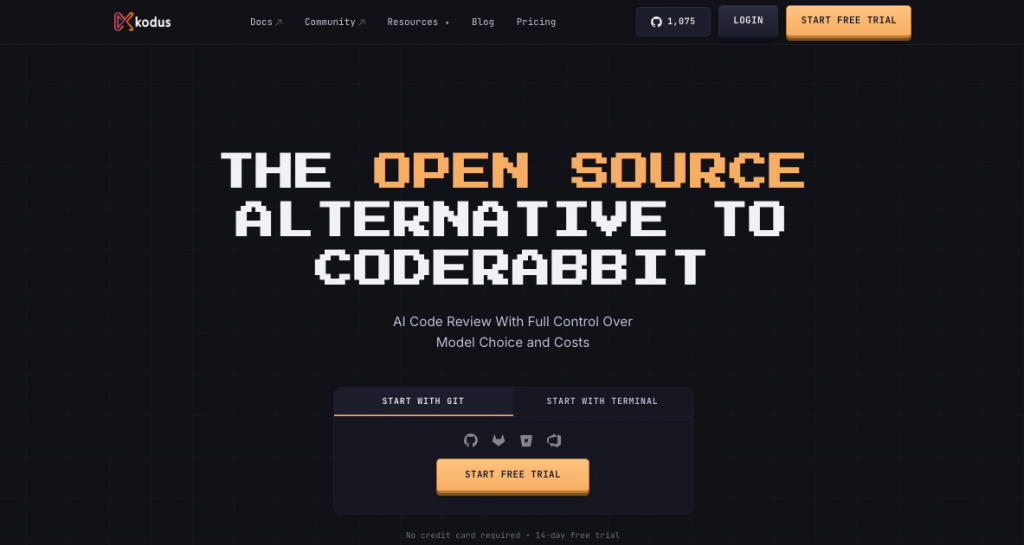
Kodus is an open-source tool and the best Bito alternative here for teams whose real problem is PR review quality. It was built around AI code review in pull requests, with strong repository context, natural-language and file-based rules, plugin support, and an exceptionally high level of control over how reviews are generated and applied.
Best for: engineering teams that want higher-quality automated PR review, less noise, clearer standards, and more control over model choice and review behavior.
Pros
1. Advanced Context and Review Architecture
- Analysis beyond the immediate diff: Uses full repository context to review Pull Requests. This makes it possible to identify changes that look correct in isolation but violate internal contracts, architectural patterns, or expected behavior in other parts of the codebase.
- PR-native approach: The review flow happens natively inside the Pull Request process, without requiring the team to change its main work surface.
2. Governance and Rule Customization
- Versioned and auditable policies: Customization works like infrastructure as code (versioned policy), not as a superficial setting. It supports natural-language rules and versioned files, making the configuration auditable in the same PR flow as the rest of the code.
- Granular and domain-based scope: Lets teams define review rules inside the repository itself, with scope by folder, language, and file type, making it easier to maintain specific standards for different areas or monorepos.
- Ideal for complex scenarios: Essential for teams that need to enforce strict architecture, compliance, platform convention, or service boundary rules.
3. Integration and External Context
- Plugin support via MCP: Allows teams to bring external context into the review, such as task tickets, specifications, or internal systems, through the MCP protocol. This raises the analysis to the level of business rules, going beyond simple syntactic or heuristic validation.
4. Infrastructure, Models, and Security
- Model-agnostic and BYOK architecture: Freedom to choose the AI provider, model, and cost strategy (Bring Your Own Key), without being tied to the vendor’s inference package.
- Flexibility to evolve: Changing the AI model does not require replacing the review platform, making it easier to compare quality, latency, and cost across different providers.
- Self-hosted option: Self-hosted deployment is available, meeting strict requirements for private networks, auditing, data residency, and compliance.
Points to consider
- BYOK gives teams more control, but it also means they need to plan provider selection and token economics.
Plans and Pricing
- Community: Free.
- Teams: US$ 10 per developer/month, plus direct costs with the chosen AI model under the BYOK model.
- Enterprise: Custom pricing based on the company’s needs.
Verdict
If your team needs a Bito alternative focused strictly on improving PR review quality, maintaining consistency, and controlling the process, Kodus is the best option. It understands the whole repository and lets teams define custom rules, acting like a senior engineer on the team, not just a basic linter.
2. CodeRabbit
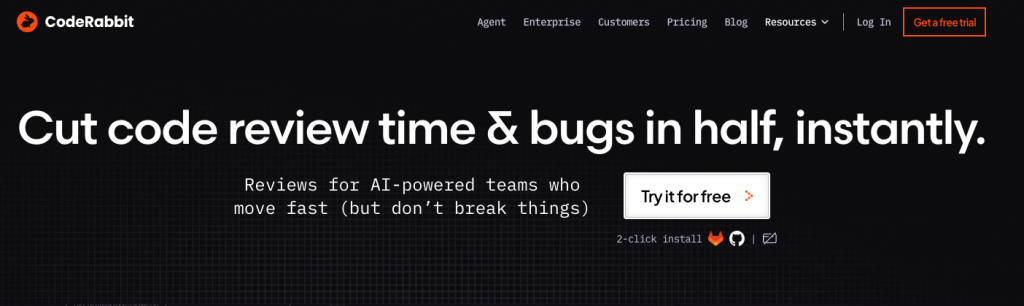
CodeRabbit is an AI code review tool that provides line-by-line comments, PR summaries, and continuous, incremental reviews in pull requests. It aims to make reviews feel like an interactive conversation directly inside the PR.
Best for: Small teams that want a simple and effective AI reviewer to find common issues and speed up reviews without requiring much configuration.
Pros
- The tool can interact with developers in PR comments, allowing them to ask for clarification and follow-up questions.
- After the first review, CodeRabbit analyzes new commits made in the same PR, evaluating only the most recent changes.
- It can explain the changes made in the PR at a high level, which helps a lot with larger sets of changes.
Points to consider
- It offers fewer customization options compared to platforms like Kodus. It focuses more on general best practices than on enforcing complex, team-specific rules.
- It mainly analyzes the diff to get context. This may not be enough for reviews that require a deep understanding of the architecture.
Plans and Pricing
- Free: Basic plan available.
- Pro: US$ 24 per developer/month billed annually, or US$ 30 billed monthly.
- Pro+: US$ 48 per developer/month billed annually, or US$ 60 billed monthly.
- Enterprise: Custom pricing and terms.
Verdict
CodeRabbit is a good choice for teams that want to quickly add AI-based feedback to their PRs. It is an excellent starting point for automating code reviews with AI.
3. Greptile
Greptile uses a different technical method, mapping your entire codebase as a graph. This helps its AI understand complex dependencies and discover how a change in one file may affect another part of the system. It was built to bring precision to large and complex repositories.
Best for: Enterprise teams with large monolithic codebases, or systems with many interconnected parts, where understanding deep dependencies is vital for accurate reviews.
Pros
- Because it can map the entire repository, it finds bugs that tools focused only on the diff would miss.
- It can suggest and write unit tests for the changes made in a pull request.
- It focuses on finding important issues, not just aesthetic style details.
Points to consider
- The initial indexing of a large repository can take some time.
- It may be too robust for smaller and simpler projects that do not need a full graph mapping of the codebase.
- Pricing can become expensive for high PR volumes, because the public plan includes 50 reviews per license and charges extra for each additional review.
Plans and Pricing
- Pro: $30 per license per month with 50 reviews included, then $1 per additional review.
- Enterprise: Custom pricing.
Verdict
If your biggest problem is that AI reviewers do not understand your complex system, Greptile’s graph-based approach may help.
4. Graphite

Graphite is first a workflow product and second an AI review product. That is not a criticism. It is exactly why some teams love it. If your team is dealing with review throughput, stacked PRs, merge conflicts, and merge queue discipline, Graphite solves a different part of the process than Bito does.
Best for: fast-moving GitHub teams that want stacked PRs, a merge queue, a PR inbox, and AI reviews in one workflow layer.
Pros
- Excellent fit for teams adopting stacked pull requests.
- Native merge queue and code review workflow tools.
- AI reviews with customization and feedback-based learning.
- Useful when the bigger problem is review throughput and merge coordination, not just finding bugs.
Points to consider
- It is more of a GitHub workflow platform than a dedicated AI review platform.
- Teams that do not care about stacked PRs or merge queues may not get the full value from the tool.
- Its AI helps with workflows, not deep code analysis for correctness or quality validation.
Plans and Pricing
- Hobby: Free.
- Starter: $20 per user per month with annual billing.
- Team: $40 per user per month with annual billing.
- Enterprise: Custom pricing.
Verdict
Graphite is an excellent choice when code review speed is tied to workflow mechanics. If the real pain is “our PR system is slow and messy,” Graphite deserves serious evaluation. If the pain is “our AI review needs better policy control and less noise,” other options on this list are better.
5. Codacy
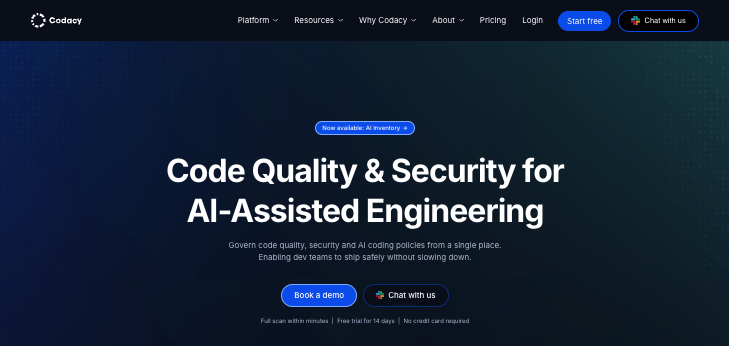
Codacy is a veteran automated code quality platform that has added AI to its existing static analysis and security scanning. It works as a governance tool, helping teams maintain quality, security, and coverage standards, with AI adding another layer of analysis.
Best for: Companies that need a centralized place for code quality and security governance, with AI as an additional feature.
Pros
- Strong foundation in static analysis, security, coverage, and governance.
- The AI Reviewer uses PR metadata, source code context, Jira data, and Codacy’s own analysis.
- Custom instructions through a `review.md` file in the repository.
Points to consider
- It may feel like a traditional static analysis tool with AI attached, rather than a platform built around AI from the beginning.
- It can be complex to use because of the large number of features and settings.
Plans and Pricing
- Team: Starts at $18 per developer per month with annual billing, or $21 monthly.
- Business: Custom pricing.
Verdict
Codacy is a better alternative if your purchase is focused on code quality and security governance with AI review included. It is not the tool I would choose first for a team specifically trying to improve signal, standards control, and trust inside AI PR review comments.
6. Cubic

Cubic is an AI code review tool that prioritizes accuracy and privacy. It strictly enforces coding rules and learns from the team’s past review history to adjust its suggestions over time. It also brings strong privacy guidelines, such as never permanently storing source code.
Best for: GitHub-focused teams that want a review-first product focused on complex codebases and lower-noise feedback.
Pros
- Strong review-focused positioning for complex codebases.
- Custom agents and personalized context.
- Background agents and fix workflows.
- Analytics reports, AI wiki, and workflow integrations.
Points to consider
- The learning process needs a sufficient amount of high-quality past review comments to work well.
- It focuses less on letting you define new and complex rules in plain language.
- Its workflow is centered on GitHub, which limits the fit for teams that use multiple Git providers.
Plans and Pricing
- Starter: Free.
- Team: $30 per developer per month with annual billing, or $40 monthly.
- Pro: $79 with annual billing, or $99 monthly.
- Enterprise: Custom pricing.
Verdict
Cubic is one of the most interesting strictly review-focused products in the category. I would include it on the shortlist for very GitHub-focused teams that care about detecting difficult bugs and concise comments.
Why Kodus is the best Bito alternative for AI code review
In practice, AI adoption in code review often fails not because teams reject the technology, but because of noise: generic comments, inconsistent analysis, and lack of alignment with the team’s internal standards. Kodus addresses this problem through four structural characteristics:
- Global repository context: The tool analyzes changes while considering the entire codebase, avoiding superficial evaluations limited only to modified lines, or an isolated diff.
- Rules through natural language: Engineering standards can be mapped in readable text format, applying these guidelines with scope restricted to specific folders or file paths.
- Model autonomy (BYOK): The platform is model-independent. The team defines which LLM to use and manages inference costs directly with the provider, such as OpenAI, Anthropic, and others.
- Infrastructure flexibility: It supports cloud or self-hosted deployment, has an open codebase, and can be extended through plugins.
As the volume of AI-generated code increases, an automated reviewer that generates irrelevant alerts becomes a burden for the team. Kodus focuses on reducing this excess of PR comments, allowing teams to shape review behavior according to their own criteria.
Frequently Asked Questions
What is the best Bito alternative?
For teams focused on AI code review in pull requests, Kodus is the best Bito alternative in 2026. It is the strongest fit for repository-aware reviews, custom standards, BYOK, and tighter control over how review automation behaves.
Is Kodus a good Bito alternative?
Yes, Kodus is an excellent Bito alternative, especially for teams whose main challenge is the pull request review process. If you need better review quality, want to enforce standards, and receive context-aware feedback in your PRs, Kodus fits better than a general-purpose AI assistant like Bito.
What is the difference between Kodus and Bito?
Kodus is primarily focused on review. It concentrates on pull request review quality, standards control, model flexibility, and deployment options. Bito is broader, covering code review, IDE help, chat, and workflow assistance.