Aikido Alternatives Worth Considering in 2026
 Edvaldo Freitas

Aikido solves a common problem well: bringing several layers of AppSec into a simpler experience for the engineering team. It helps find issues in dependencies, code, secrets, IaC, containers, and other parts of the workflow without forcing the team to build a security stack full of separate tools. But not every team looking for Aikido alternatives wants to replace an entire AppSec platform with another one just like it. Often, the pain is more specific. The team wants better comments in pull requests, less noise, review rules that are closer to the reality of the codebase, or a solution that fits better into an existing security program.
That is why comparing Aikido alternatives is not just about looking at who has more scanners. The right choice depends on the main problem: broad security coverage, enterprise governance, quality gates, or AI code review inside PRs. In this article, we’ll compare the main options and show where each one makes the most sense.
What is Aikido Security?
Aikido is a security platform for development teams that want to centralize AppSec checks without having to stitch several separate tools together. It covers areas such as open source dependencies, code analysis, secrets, infrastructure as code, containers, licenses, malware, and cloud risks.
Aikido’s proposal is to be a simpler and more direct layer for finding security issues inside the engineering workflow. Instead of making the team jump between different dashboards, it brings findings into a single platform and tries to move security closer to developers’ day-to-day work.
In practice, it makes sense for teams that want to start or better organize an AppSec program without creating a process that feels too heavy. Aikido also offers features like security review in pull requests, custom rules, and AI AutoFix, which helps bring part of the remediation closer to the code.
The important point is to understand that Aikido is a broad AppSec platform. It was built to provide coverage across several areas of security, not necessarily to solve every detail of code review, internal engineering standards, or PR governance. That is why, in some cases, teams end up looking for more specific alternatives for each pain point.
List of Aikido alternatives
1. Kodus
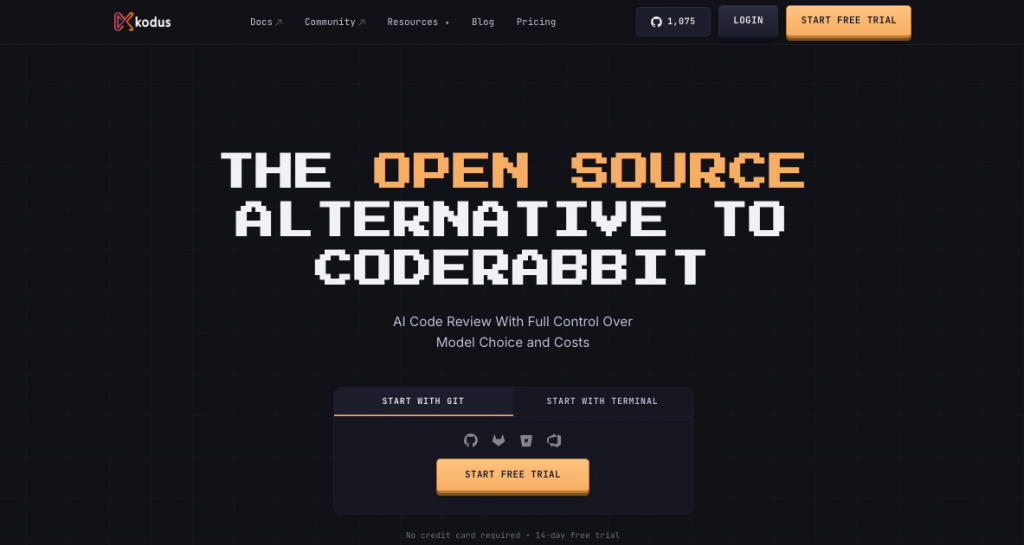
Kodus is an open source AI code review tool built for teams that want to review pull requests with more context, less noise, and more control over engineering rules. It works directly in the PR and MR workflow, with support for GitHub, GitLab, Bitbucket, and Azure DevOps.
As an Aikido alternative, Kodus does not try to replace the platform’s entire AppSec coverage. Aikido is broader: it covers SCA, SAST, secrets, IaC, malware, licenses, code quality, and other security-related checks. Kodus focuses on a more specific layer: code review inside the pull request.
This matters when the team’s problem is not just finding known vulnerabilities, but applying internal engineering standards. For example: making sure billing changes have regression tests, blocking direct database access in controllers, requiring extra validation on public endpoints, or applying different rules by folder in a monorepo.
Best for: teams that want AI code review with repository context, custom internal rules, BYOK, self-hosting, and more control over model, cost, and infrastructure.
Pros
- Custom rules in natural language: Kodus lets teams create Kody Rules to guide reviews with team-specific standards. These rules can cover architecture, security, tests, performance, product domain, and internal conventions.
- Codebase-specific security rules: you can create checks for patterns a generic tool does not know, such as requiring an internal authorization helper, preventing authentication bypass, validating tenant isolation, or blocking changes in critical flows without tests.
- Context-based scope: rules can be applied by path, language, file type, or PR scope. This helps a lot in monorepos or systems with very different areas, where a billing folder may have different requirements from a front-end folder.
- External context through MCP: Kodus can use MCP plugins to fetch information from tickets, specs, documentation, internal systems, or company policies. This helps when the review needs to compare the change with a business rule or security requirement that is not explicit in the diff.
- BYOK and model control: Kodus lets you use your own AI provider key. The team gets more control over cost, model, latency, and data policy, without depending entirely on the tool vendor for inference.
- Self-hosting and open source: for companies with privacy, compliance, or data residency requirements, the self-hosted option allows the review pipeline to run inside their own infrastructure.
Cons
- Does not replace a full AppSec platform: Kodus is not a direct replacement for every Aikido feature.
- More focused on PRs than on a security dashboard: for security teams that need a central view of risk, compliance, and vulnerabilities across several layers of the stack, Aikido may make more sense as the main dashboard.
Pricing
Kodus has a free Community plan, with BYOK and cloud or self-hosted deployment. The Teams plan costs $10 per developer per month, plus the token cost of the chosen model through BYOK. The Enterprise plan has custom pricing, and all plans can run in cloud or self-hosted.
Verdict
Kodus is the best Aikido alternative when the main problem is pull request review, not AppSec coverage as a whole. It makes more sense for teams that want to reduce generic comments, apply internal engineering standards, and have more control over how AI reviews code.
2. Snyk Code
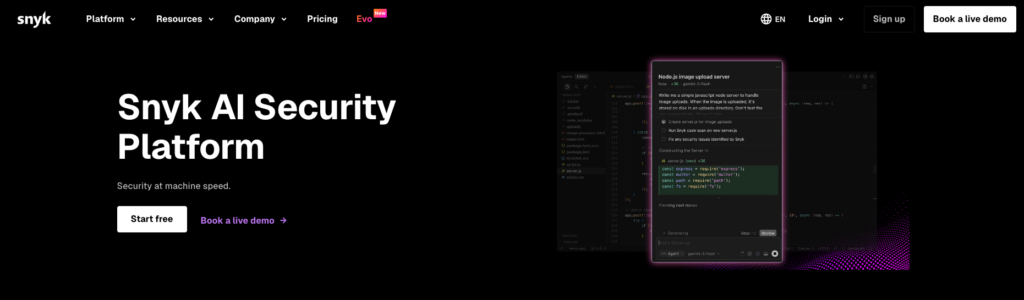
Snyk is the closest Aikido alternative for teams that still want a developer-focused security platform. It covers SAST through Snyk Code, open source dependency scanning, container security, IaC, and other security workflows in IDE, CLI, CI, and pull requests.
Best for: teams that want developer-first AppSec coverage across code, dependencies, containers, and infrastructure as code.
Pros
- Good AppSec coverage: Snyk covers proprietary code, open source dependencies, containers, and IaC. For teams that want a broad alternative to Aikido, it fits well in the comparison.
- Snyk Code for SAST: Snyk Code uses semantic analysis with data flow, control flow, interfile analysis, and detection of issues such as unsafe API usage, null dereference, race conditions, and hardcoded secrets inside SAST.
- Integration with the developer workflow: it can run in the IDE, CLI, CI/CD, repositories, and PRs. This helps find problems before merge and also at the moment the code is being written.
Cons
- Not focused on internal engineering rules: Snyk finds vulnerabilities and risks, but it was not built to apply codebase-specific rules.
- Inline comments have a limit: the PR experience has a limit of 10 inline comments per pull request. If it goes beyond that, the summary shows that the limit has been reached.
Pricing
Snyk has a Free plan with limited tests by product. The Team plan starts at $25 per contributing developer per month, with a minimum of 5 and a maximum of 10 contributing developers, and products purchased separately. The Ignite plan starts at $1,260 per contributing developer per year, includes SCA, SAST, IaC, and Container, and goes up to 50 contributing developers. The Enterprise plan has custom pricing.
Verdict
Snyk is one of the best Aikido alternatives when the team wants a more traditional and mature AppSec platform, especially for SCA, SAST, containers, and IaC.
I would choose Snyk when the priority is finding vulnerabilities early, prioritizing risk, and bringing security into IDE, CI, and PRs. If the main pain is PR review with internal architecture, domain, and codebase-specific rules, Snyk does not solve that as well. In that case, it works better alongside a tool like Kodus.
3. SonarQube
SonarQube is an Aikido alternative for teams that want to put code quality, static analysis, and quality gates inside the CI/CD workflow. It is not exactly an “all-in-one” AppSec platform in the same style as Aikido. SonarQube’s goal is different: to detect maintainability, reliability, security, coverage, duplication, and complexity issues before code is merged.
As an Aikido alternative, it makes sense when the team wants to turn quality into an objective merge rule.
Best for: teams that want static analysis, quality gates, code quality, coverage, and basic security integrated into CI/CD.
Pros
- Well-defined quality gates: SonarQube lets teams create conditions to block merge or fail a pipeline based on metrics such as new issues, coverage, duplication, security rating, maintainability, and reliability.
- Good for quality governance: it works well when the company wants to standardize minimum quality criteria across several repositories and teams.
- Pull request analysis: SonarQube analyzes the code changed in the PR and can report the quality gate status in the DevOps provider. The analysis runs when the PR is opened or when new commits are pushed.
- Quality profiles: you can configure rule sets by language or project. This helps adapt the level of enforcement by stack.
Cons
- Does not cover the same broad scope as Aikido by default: Aikido includes SCA, SAST, AI SAST, secrets, IaC, containers, cloud, malware, licenses, PR security review, and AutoFix inside a more consolidated proposal.
- Can generate a lot of noise if poorly configured: if the team enables too many rules without calibrating severity, the PR can become a long list of code smells that developers start to ignore.
Pricing
SonarQube Community Build is free. SonarQube Server Developer starts at $750 per year, recommended for 100K+ lines of code. Other plans are available on request.
Verdict
SonarQube is a good Aikido alternative when the main goal is to control code quality and create objective gates in the pipeline. It is especially useful for teams that want to standardize static analysis, coverage, maintainability, and security hotspots in the merge workflow.
I would not choose SonarQube as a direct Aikido replacement if the company wants a broad AppSec platform with SCA, containers, cloud security, malware detection, and AutoFix gathered into one product. It is also not the best choice for review with internal rules in natural language. In that case, SonarQube works better alongside an AI code review tool, like Kodus, or alongside a broader AppSec platform.
4. Checkmarx
Checkmarx One is an AppSec platform mainly built for companies that need broad security coverage and governance across many repositories, applications, and teams. It covers SAST, SCA, API Security, DAST, container security, IaC, secrets detection, malicious package detection, repo health, cloud insights, and other modules, depending on the package purchased.
As an Aikido alternative, Checkmarx makes sense when the company needs a more enterprise platform, with deep SDLC integrations, policies, reporting, triage, and more formal security workflows.
Best for: larger companies that need AppSec at scale, with SAST, SCA, DAST, API Security, IaC, containers, secrets, and centralized governance.
Pros
- Broad AppSec coverage: Checkmarx One covers several important security categories, including SAST, SCA, API Security, DAST, container security, IaC Security, secrets detection, and malicious package detection, depending on the package.
- Good for companies with many teams: the platform was designed for environments with many repositories, pipelines, applications, and different teams.
- Integrations with SCM, CI/CD, and IDE: Checkmarx has integrations with GitHub, GitLab, Bitbucket, Azure DevOps, Jenkins, GitHub Actions, Azure DevOps Pipelines, JetBrains, VS Code, Visual Studio, Eclipse, and other workflows.
Cons
- Customization focused on security, not engineering rules: Checkmarx helps control security policies and findings, but it is not the ideal tool for internal rules.
- Depends heavily on configuration: to generate value without too much noise, the company needs to configure policies, severity, triage, ticket integration, and blocking criteria.
Pricing
Checkmarx works with custom pricing.
Verdict
Checkmarx is a good Aikido alternative when the company needs a more enterprise AppSec platform, with broad coverage, policies, reporting, and integration with several points of the SDLC. It makes more sense for organizations with a structured security team or stronger governance requirements.
I would not choose Checkmarx as the first option for a small team that wants something simple, fast, and closer to developers.
Aikido alternatives comparison
| Tool | Main layer | What it checks | How it works in PRs | Rules and governance | When to choose it |
|---|---|---|---|---|---|
| Kodus | AI code review and PR governance | Code changes, internal standards, team security rules, architecture, tests, and domain rules. | Reviews PRs directly, comments inline, applies Kody Rules, and filters duplicate suggestions. | Kody Rules in natural language, versioned in the repo, with scope by folder, file, or PR type. | Teams that want to shape review around how their own codebase works, not generic findings. |
| Aikido | All-in-one AppSec platform | SCA, SAST, AI SAST, secrets, IaC, containers, cloud security, malware, and licenses. | Can run security checks in PRs, gating, and AutoFix for supported issue types. | Supports custom rules for security/quality, but focus remains AppSec across several categories. | Teams that want broad security coverage in one product, without building a multi-tool stack. |
| Snyk | Developer-first AppSec | SAST with Snyk Code, open source dependencies, containers, IaC, API, and web testing. | Runs in IDE, CLI, CI/CD, and PRs. Can add PR summaries and inline comments for findings. | Uses security policies, priority score, ignores, Jira integration, and product-level controls. | Teams that want AppSec close to the dev workflow, mainly for dependencies and code security. |
| SonarQube | Static analysis and quality gates | Code smells, bugs, security hotspots, maintainability, reliability, duplication, and coverage. | Runs pull request analysis and reports quality gate status in CI and DevOps platforms. | Uses quality profiles, quality gates, rule configuration, and custom deterministic criteria. | Teams that want to control merge based on static analysis, coverage, and quality standards. |
| Checkmarx | Enterprise AppSec platform | SAST, SCA, DAST, API, IaC, containers, secrets, malicious packages, and supply chain. | Can trigger scans on push/PR and decorate PRs with scan status, summary, and findings. | Uses security policies, triage, reports, APIs, webhooks, and enterprise governance controls. | Organizations with mature AppSec programs needing broad coverage and reporting across many teams. |
Which Aikido alternative should you choose?
The choice depends less on the feature list and more on the problem you are trying to solve. Aikido covers several AppSec fronts in a single product, so the best alternative changes depending on the team’s main pain.
If the problem is pull request review, choose Kodus. It makes more sense when the team wants to reduce generic comments, apply internal engineering and security standards, and review changes with more repository context. It is the best fit when rules like endpoint validation, tenant isolation, sensitive logs, use of internal helpers, or tests in critical areas need to appear inside the PR.
If the focus is application security in the developer workflow, choose Snyk. It is a closer alternative to Aikido for teams that want to cover SAST, SCA, containers, and IaC, with integration in IDE, CLI, CI/CD, and pull requests. It makes sense for teams that want to find vulnerabilities early and keep security close to where code is written.
If the priority is code quality and quality gates, choose SonarQube. It is better when the team wants to control merge based on static analysis, coverage, duplication, maintainability, reliability, and security hotspots. It is a good choice for companies that want objective criteria in CI before code enters the main branch.
If the company needs a more enterprise AppSec platform, choose Checkmarx. It makes more sense for organizations with many repositories, different teams, security policies, reporting, triage, and a more mature AppSec operation. It is the most suitable option when the decision involves governance, audit, and broad coverage across several security categories.
Frequently asked questions
▾ What is the best Aikido alternative?
It depends on what the team wants to replace. For broad AppSec coverage, Snyk and Checkmarx are closer comparisons. For quality gates and static analysis, SonarQube makes more sense. For teams that want to improve PR review with AI, apply internal rules, and reduce generic comments, Kodus is the most interesting alternative.
▾ How is Snyk different from Aikido?
Aikido and Snyk are more similar to each other. Both look at AppSec across several areas. Snyk usually makes sense for teams that want a developer-first platform focused on dependencies, SAST, containers, and IaC. Aikido may be more attractive for teams that want to consolidate several security categories into a more direct product.
▾ How is SonarQube different from Aikido?
SonarQube is centered on code quality and static analysis. Aikido has broader AppSec coverage. Teams usually choose SonarQube when quality gates and maintainability are part of the merge process.
▾ Can Kodus apply security rules?
Yes. Kodus lets teams create security rules in natural language using Kody Rules. The team can turn internal standards into automatic checks inside the PR, such as mandatory use of authentication helpers, input validation, authorization rules, protection against sensitive data leaks, and care around critical flows.
▾ When should you choose Kodus instead of Aikido?
Choose Kodus when the team needs the review to understand the codebase and apply project-specific rules. For example: requiring validation on public endpoints, preventing direct database access in certain layers, requiring tests in billing, blocking logs with sensitive data, or validating tenant isolation. These rules depend on repository context and are usually not well covered by a generic scanner.